Ninety Minutes of Nothing: Why One Deliberate Bucket Beats Your Entire Cage Routine

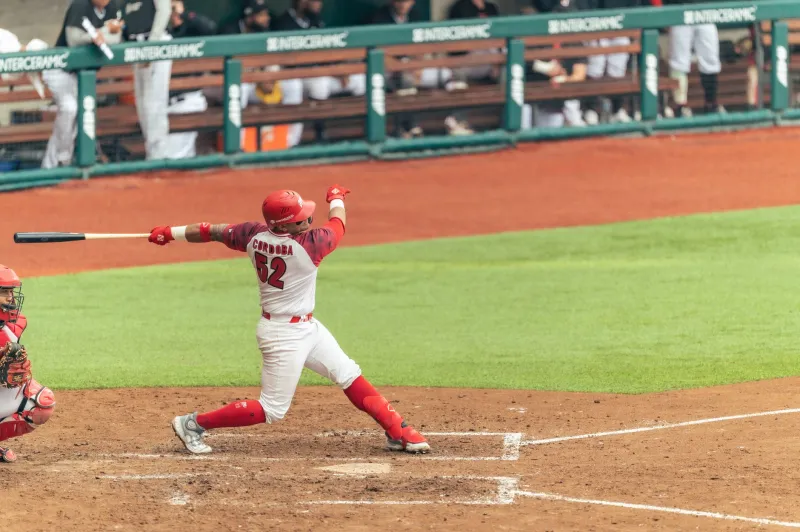
Photo: Henry Shifrin (Massachusetts Governor’s Press Office), Public domain, via Wikimedia Commons
There is a ritual familiar to every baseball family in America. The hitter arrives at the facility, feeds tokens into a machine, and swings until his hands ache. Ninety minutes later, the receipt says four rounds, two hundred swings. The session gets logged as productive.
But productivity measured in swings is a category error. As any Japanese hitting instructor worth his clipboard will tell you, the question was never how many. It was how many that changed something.
The Volume Trap
American hitting culture inherited its bias from the gym floor: more reps, more muscle, more results. Hitting, however, is a skill of precision under variability, not strength under load. Research on motor learning has consistently shown that blocked, repetitive practice — the same swing, the same speed, the same pitch shape, over and over — produces impressive session performance and miserable retention.
In other words, the two-hundred-swing session feels great because the conditions never change. The hitter is not learning to hit; he is learning to repeat one solution to one problem.
Japanese practice design, shaped by decades of resource-conscious team training — one field, one bucket, twenty players — evolved in the opposite direction. Scarcity forced efficiency. When every player gets limited reps, each rep must carry a purpose, and the structure of the session becomes as important as the swing itself.
The Anatomy of a Deliberate Session
Here is what a purpose-built, single-bucket session looks like. Total time: thirty to forty minutes. Total balls: fifty. Total mindless swings: zero.
Phase One — Intention Setting (5 minutes, no balls). Before touching a bat, the hitter writes down or states aloud one mechanical focus and one competitive goal for the session. "Stay connected through the turn" and "drive the ball the other way" is enough. Vague goals produce vague reps.
Phase Two — Movement Quality (10 balls). Slow, exaggerated swings off a tee at 50 percent speed, feeling the specific movement from Phase One. This is rehearsal, not performance. Quality is judged by whether the intended feeling showed up, not where the ball went.
Phase Three — Constraint Work (15 balls). Now the drill narrows the task. Examples: a tee placed deep and outside forcing opposite-field contact; a stride-length limiter; a finish-position hold requiring balance for two full seconds after contact. Constraints do what verbal cues cannot — they make the correct movement the only available option.
Phase Four — Randomized Application (15 balls). A coach or partner tosses an unpredictable mix of locations and speeds. The hitter must now solve problems in real time using the movement pattern just grooved. Success is measured in hard contact and intended trajectory, not raw outcomes.
Phase Five — Pressure Finish (10 balls). The final round has a rule: the hitter must execute a called result — a ground ball through the 4-hole, a fly ball over the runner's head. A miss extends the round. This is where the session earns its transfer to games.
Why Fewer Reps Teach More
The mechanism is well documented in skill-acquisition research: effortful retrieval beats passive repetition. Every randomized rep in Phases Four and Five forces the hitter to decide — read, adjust, commit. Decision-making under variability is precisely the skill games demand and blocked practice never builds.
There is also a fatigue argument. Swing mechanics degrade quietly as muscles tire; the last hundred swings of a long session are often teaching the body a worse version of the swing than the first twenty. Ending fresh, on high-cognitive-load reps, means the final impression the nervous system stores is a good one.
Making the Shift
For players accustomed to volume, the short session initially feels insufficient — almost anxious. That discomfort is diagnostic. It reveals how much of the old routine was motion without meaning.
A practical transition: keep the long sessions if you must, but convert the final thirty minutes into the five-phase structure above. Within a few weeks, most hitters voluntarily cut the warm-up volume as they notice the quality of the deliberate rounds doing more for their at-bats than the filler ever did.
One bucket. Fifty balls. A plan. It is not romantic, and it will not fill a highlight reel. But measured against ninety minutes of machine-fed rhythm swings, it is not a contest.