The Swing Doesn't Stop at Contact: How Japanese Hitters Are Trained to Finish with Purpose
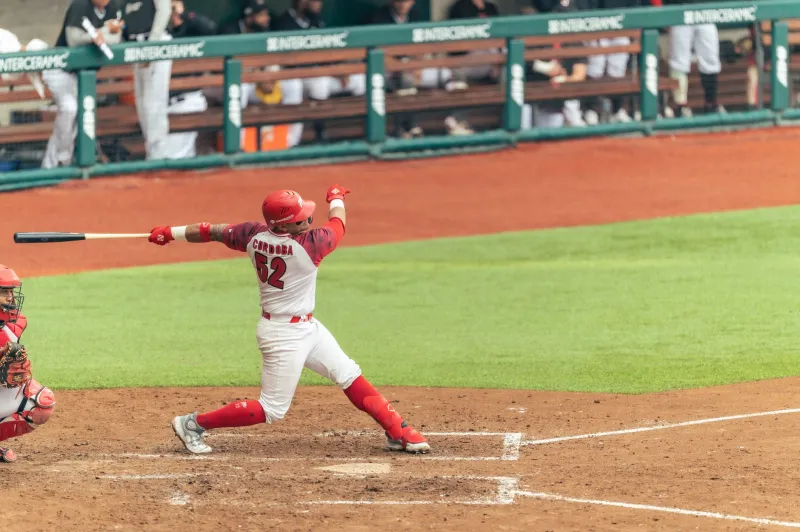
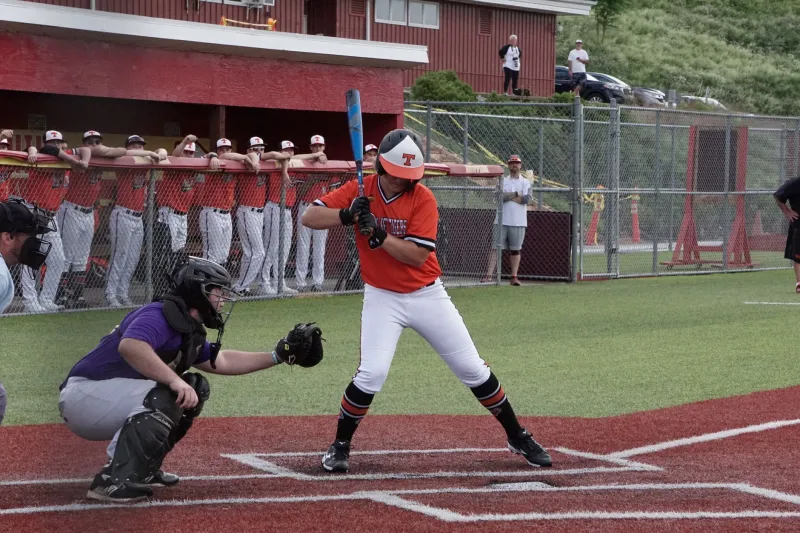
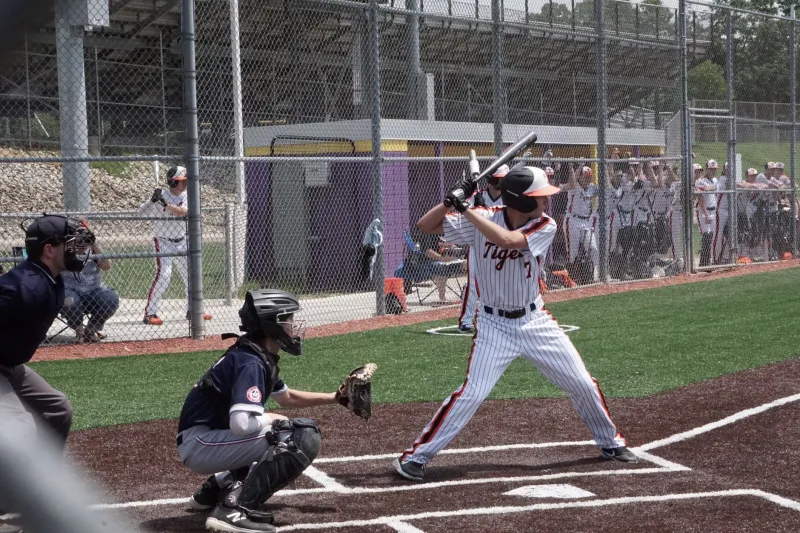
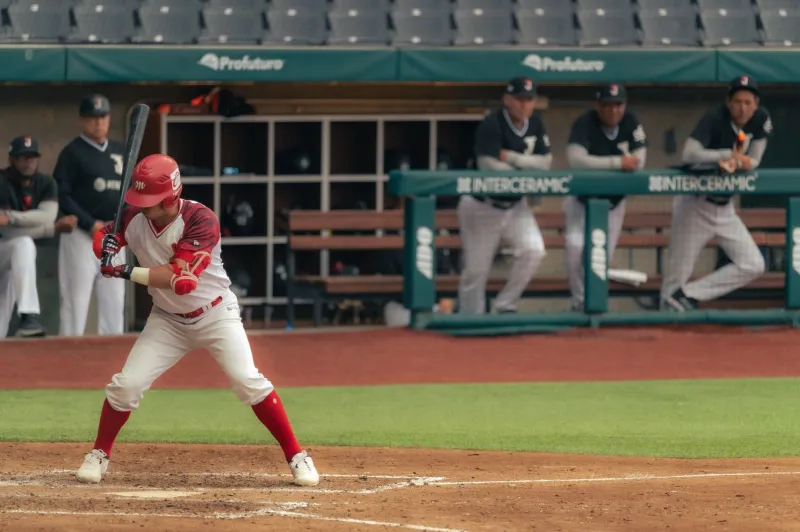
There is a widespread assumption embedded in American batting culture: once the ball leaves the bat, the swing is over. Coaches correct launch angles, obsess over hand path, and drill the first six inches of barrel travel with surgical precision — but the finish? It is often treated as an afterthought, a cosmetic flourish that looks good in a photo but contributes little to actual performance.
Japanese baseball academies see it differently. Across professional organizations and youth development programs in Japan, the follow-through is not a passive conclusion to the swing. It is an active, trainable phase with measurable consequences for bat speed, joint integrity, and long-term hitting consistency. The discipline of controlled deceleration — managing how the swing ends — is regarded there as a fundamental skill, not an optional refinement.
For American hitters looking to close the gap between mechanical potential and real-world results, understanding this philosophy may be one of the most overlooked adjustments available.
Why Deceleration Gets Ignored in the American Model
American coaching culture is, understandably, results-oriented. Exit velocity metrics, launch angle data, and bat speed readings have all pushed training focus further and further toward the initiation phase of the swing. The logic is straightforward: if contact happens in the first half of the movement, that is where the work should be concentrated.
What this framework misses is the relationship between how a movement ends and how it begins. In biomechanics, deceleration patterns directly influence the sequencing of the subsequent repetition. A hitter who finishes with uncontrolled, collapsing mechanics is not simply ending that swing poorly — they are setting up a compromised starting position for the next one. Over hundreds of at-bats, that compounding inefficiency quietly erodes consistency in ways that no launch angle adjustment can repair.
Japanese coaches have long understood this feedback loop. The follow-through, in their framework, is treated as the first movement of the next swing.
The Biomechanical Case for a Trained Finish
To appreciate why the finish matters mechanically, it helps to consider what is actually happening in the body during the deceleration phase. After contact, the swing generates enormous rotational momentum. The muscles responsible for braking that momentum — primarily the posterior shoulder complex, the obliques, and the hip stabilizers — are working under significant eccentric load.
If those muscles are undertrained or if the movement pattern is chaotic, the body compensates. Common compensation patterns include the back elbow collapsing inward, the spine laterally flexing under load, and the front hip breaking down rather than remaining stable through the finish. Each of these compensations represents not only a mechanical inefficiency but a genuine injury risk, particularly to the shoulder, elbow, and lumbar spine.
Japanese training programs address this directly through dedicated deceleration drills — exercises that isolate the eccentric braking demands of the follow-through and build the muscular endurance to handle them repeatedly. The result is a hitter whose body can sustain clean mechanics across a full game, not just in the first few at-bats when the muscles are fresh.
The Paradox of More Force Through Better Braking
Here is where the Japanese approach becomes genuinely counterintuitive: training the deceleration phase does not just protect the body — it actually generates more force through the contact zone.
The mechanism is rooted in what sports scientists call the stretch-shortening cycle. When a muscle knows it will be braked efficiently after a powerful contraction, the nervous system allows it to express more force during that contraction. In simple terms, your body swings harder when it trusts the stopping mechanism. A hitter whose finish is uncontrolled is, at a subconscious level, holding back — the nervous system is applying an internal governor to protect joints it does not trust to absorb the load.
Japanese coaches describe this principle in practical terms: the hitter who trains the finish is giving their body permission to fully commit through the ball. This is not a metaphor. It is a neurological reality, and it explains why some technically gifted American hitters with impressive raw strength consistently underperform their physical tools.
What Finish-Focused Training Actually Looks Like
In Japanese academies, follow-through training takes several forms, each targeting a distinct aspect of deceleration mechanics.
Resistance band finish drills attach light resistance to the barrel end of the bat and require the hitter to control the follow-through against that resistance, building eccentric strength in the braking muscles without altering the natural swing path.
Mirror work with pause holds asks hitters to freeze at the completion of the follow-through and hold the position for several seconds. This exposes structural weaknesses immediately — if the spine is laterally flexed, if the front shoulder has rolled forward, or if the hips have opened too aggressively, the held position makes those errors impossible to ignore.
High-repetition dry swings with deliberate deceleration train the neuromuscular system to treat the finish as an intentional act rather than a passive stop. Hitters are coached to think of the follow-through as something they are doing, not something that simply happens after contact.
These drills are not glamorous, and they do not produce the kind of dramatic before-and-after video clips that populate social media training content. That, perhaps, is part of why they have been slow to migrate into mainstream American coaching.
Consistency as the Quiet Dividend
Beyond injury prevention and force production, there is a third benefit to finish-focused training that deserves attention: consistency across pitch types and locations.
One of the most reliable markers of an elite hitter is the uniformity of their finish regardless of where the pitch is located. A well-trained follow-through adapts to the swing path required for an inside fastball versus an outer-third breaking ball, but the structural integrity of the finish remains constant. The spine stays aligned, the front side holds, and the braking sequence completes cleanly.
Hitters who have not trained the finish show significantly more variability in their follow-through across pitch locations. On difficult pitches — the low-and-away slider, the elevated fastball — the finish collapses, and with it, the mechanical integrity of the entire swing. Japanese hitters are specifically trained to maintain finish quality under those conditions, which is a significant reason why contact rates among elite Japanese professionals tend to remain high against off-speed pitches that generate higher miss rates among comparable American hitters.
A Shift in How the Swing Is Defined
The deeper implication of the Japanese approach is a redefinition of what the swing actually is. In the American model, the swing is roughly synonymous with the path to contact. In the Japanese model, the swing is the complete rotational event — from load through finish — and every phase of that event is subject to the same standard of deliberate, trainable refinement.
For coaches working with developing hitters at any level, this reframing has immediate practical value. Time spent on deceleration mechanics is not time taken away from contact work. It is investment in the structural foundation that makes contact work sustainable and repeatable over a long season.
The swing does not end when the ball leaves the bat. For Japanese hitters, that is where some of the most important training begins.