The Frozen Hip Problem: What Japanese Coaches Diagnose in Minutes That American Players Carry for Years
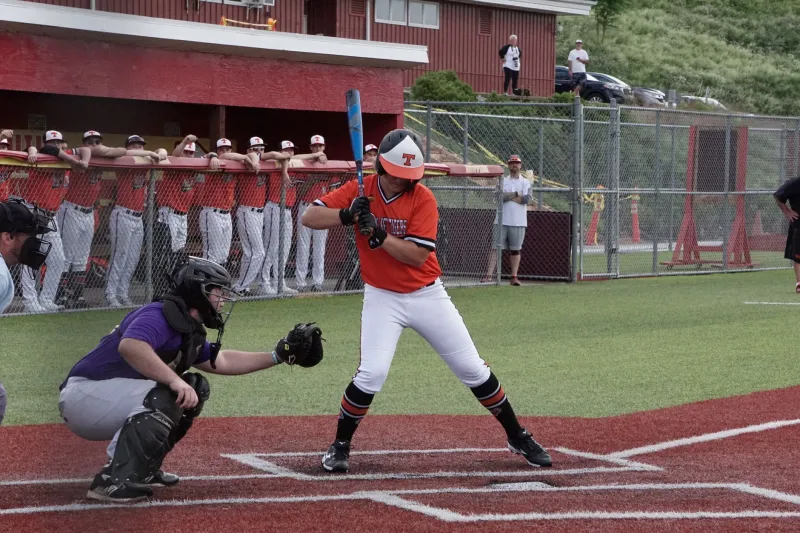
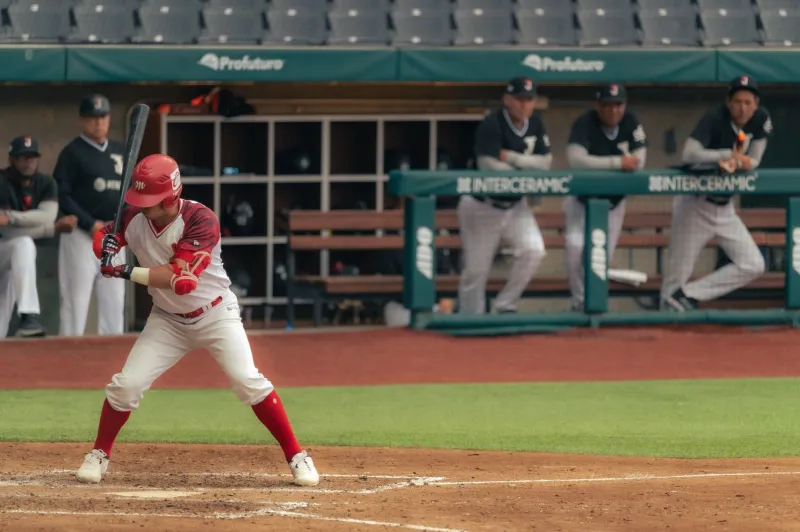
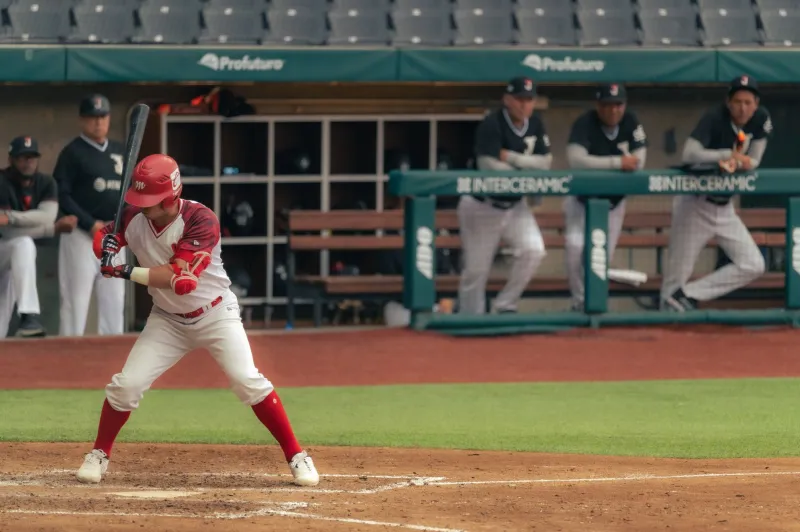
Somewhere between the weight room and the batter's box, a significant number of American hitters develop a mechanical pattern that nobody ever names out loud. They load, they stride, they swing — and the barrel moves through the zone with what looks like conviction. But underneath all that activity, the back hip is doing almost nothing. It tilts. It dips. It shifts laterally. What it does not do is rotate.
Japanese coaches have a specific term for this category of hitter: the katamari type, or the "clumped" mover — a player whose lower half operates as a single rigid unit rather than as a sequenced kinetic chain. In American development circles, the same athlete is usually just described as "powerful" or "physical," because the restriction is invisible until someone knows exactly what to look for.
This article is about what they're looking for, why it matters, and how Japanese coaching methodology addresses it with a speed and precision that should make every American hitting instructor pay attention.
Why the Back Hip Stops Working
The back hip's job during a swing is deceptively simple to describe and remarkably difficult to execute: it must internally rotate while the pelvis drives forward, creating the torque that transfers energy from the lower body into the upper body and, ultimately, into the barrel. When this happens correctly, the back knee tracks inward, the back heel rises naturally, and the entire posterior chain fires in a coordinated sequence.
When it doesn't happen, the hitter compensates. The arms take over. The upper body lunges. The front side collapses. Exit velocity drops, contact quality deteriorates, and nobody can quite explain why — because everything above the waist still looks fine.
The culprit, according to biomechanists and Japanese swing instructors alike, is almost never a lack of effort. It is a structural restriction created by two very specific habits that have become deeply embedded in American athletic culture.
The first is posture. Years of sitting — in classrooms, in dugouts, in cars — creates chronic tightness in the hip flexors and external rotators of the back leg. This tightness physically prevents the internal rotation that proper hip engagement requires. The hitter isn't choosing to restrict their back hip. Their tissue won't allow them to do otherwise.
The second is the weight room. Barbell squats, conventional deadlifts, and leg press machines all develop posterior-chain strength in patterns that emphasize bilateral loading and external rotation. This strength is real and valuable — but it trains the hip to push, not to rotate. When a hitter who has spent three years squatting heavy steps into the box, their nervous system defaults to the pattern it knows best. The back hip pushes against the ground rather than turning through it.
The Japanese Diagnostic Protocol
When a player arrives at a Japanese academy or works with a Japanese-trained hitting coach, the assessment doesn't begin with video. It begins with movement.
The coach asks the hitter to perform a simple rotational reach test: standing in their batting stance, they attempt to rotate the back hip internally while keeping the front foot planted and the spine neutral. Most restricted hitters cannot complete this motion without immediately shifting their weight forward, tilting their pelvis, or losing spinal alignment. The compensation is immediate and obvious.
From there, the coach performs a hip internal rotation range-of-motion check — the player sits on a bench, and the coach measures how far the back leg can rotate inward from a neutral position. Anything below approximately 35 degrees of internal rotation is flagged as a mechanical limitation, not a technique problem. This distinction is critical. No amount of swing coaching will fix a mobility deficit. The tissue has to change first.
The third diagnostic step is a simple wall drill. The hitter stands with their back to a wall, assumes their stance, and attempts to fire the back hip into rotation while keeping their back against the surface. Hitters with true rotation drive their back knee inward and lift their heel cleanly. Restricted hitters push backward into the wall, revealing that their nervous system is still patterning a push rather than a turn.
All three assessments can be completed in under ten minutes. Most Japanese coaches have run this sequence so many times that they can identify the restriction pattern simply by watching a player take three practice swings.
The One-Session Fix
Once the restriction is identified and its source understood, Japanese coaches move immediately into corrective work — and the protocol is notably unglamorous. There are no velocity sensors, no complex drills, no technology required.
The first intervention is a targeted hip capsule stretch called the 90/90 position, in which the hitter sits on the floor with both legs bent at 90-degree angles — one in front, one to the side — and holds a passive stretch of the back hip's internal rotators for two to three minutes per side. This is performed before every session until the range-of-motion test normalizes. Japanese coaches consider this non-negotiable. A hitter with a frozen hip who skips this step is, in their view, practicing compensation, not baseball.
The second intervention is a rotational activation drill using a resistance band. The band is looped around the back knee, providing light resistance in the direction opposite to internal rotation. The hitter then performs slow, deliberate hip-fire movements — isolating the back hip's rotational pattern without any swing involved — for two sets of fifteen repetitions. The resistance band forces the nervous system to consciously recruit the muscles that have been dormant, essentially re-educating the movement pattern at the neurological level.
The third and final piece is a tee drill with a specific constraint: a foam roller or rolled-up towel is placed between the hitter's back thigh and calf, forcing the knee to stay bent and the heel to stay loaded until the hip has fully rotated. This makes it physically impossible to push instead of turn. Within twenty to thirty swings, most hitters begin to feel the back hip engaging for what may be the first time in years.
The power gains that follow are not subtle. Hitters routinely report feeling a "pop" through the ball that they had never previously experienced. Exit velocity improvements of three to six miles per hour in a single session are not uncommon in Japanese academy documentation, simply because the energy that was always available in the posterior chain is finally being allowed to transfer.
What American Coaches Can Take From This
The Japanese approach to back-hip restriction is instructive not because it is exotic, but because it is systematic. It treats the body as a complete system rather than isolating the swing as a purely mechanical event. It distinguishes between mobility deficits and technique errors before prescribing any correction. And it prioritizes restoring function before layering in skill.
American coaches who adopt even a portion of this diagnostic mindset — beginning sessions with a brief movement screen, identifying restriction before coaching swing mechanics — will find that many of the "technique problems" they have been trying to coach away simply resolve themselves once the underlying tissue limitation is addressed.
The back hip is not a minor detail. It is the engine of the swing. And for a significant portion of American hitters at every level, that engine has been running at half capacity for years — not because nobody cared enough to fix it, but because nobody looked closely enough to find it.