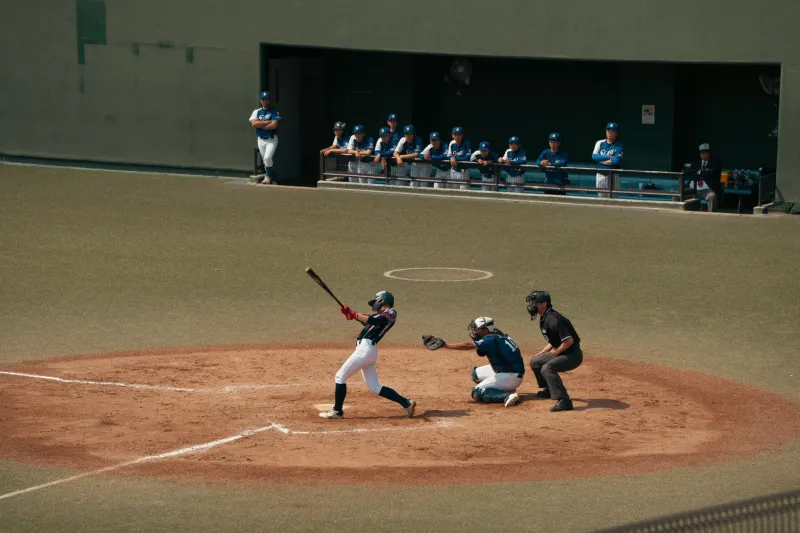
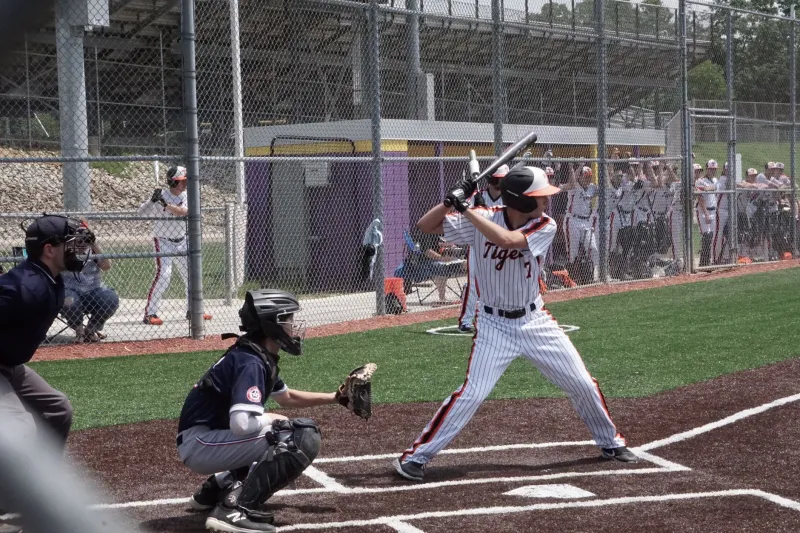
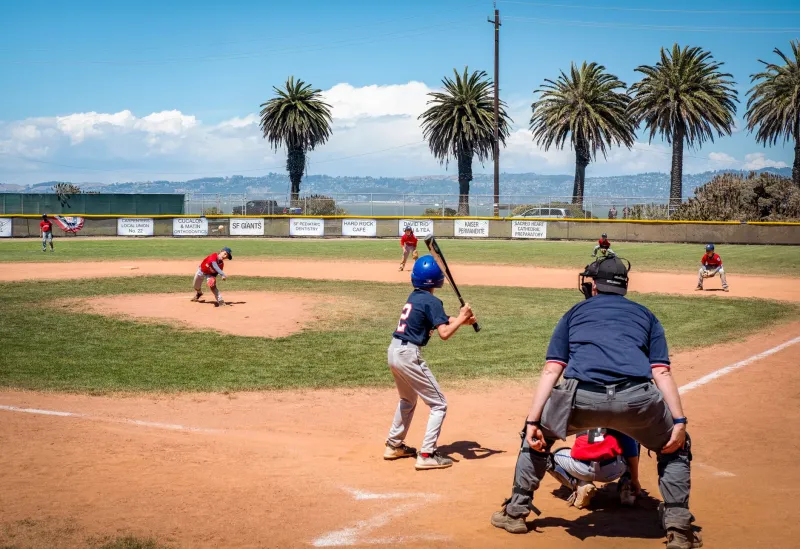
How Wide Is Too Wide? The Biomechanical Truth About Stance Width That Japanese Coaches Have Been Measuring for Years
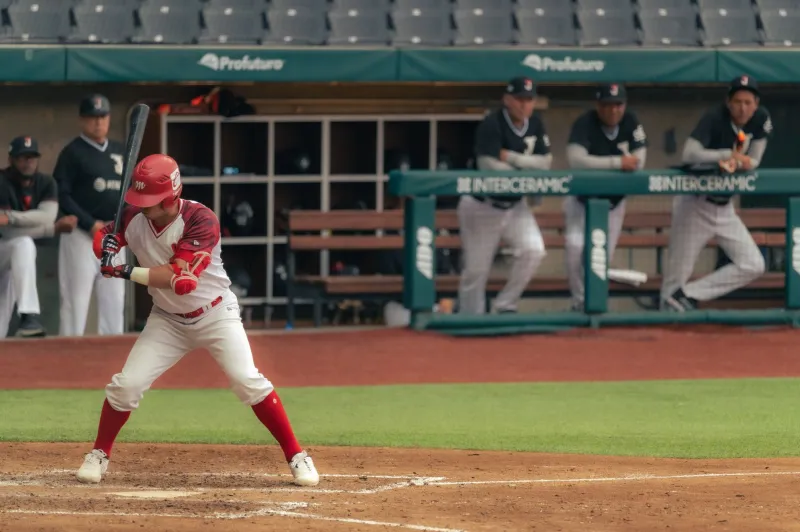
Walk into any American batting cage and you will likely see the same pattern repeated across age groups and skill levels: hitters spreading their feet well beyond shoulder width, planting themselves into the ground as though bracing against a hurricane. The logic feels intuitive. A wider base means greater stability. Greater stability should translate into more power. If it works for the sluggers on television, it should work for everyone.
Japanese coaching methodology has been quietly challenging that assumption for decades — not by advocating for a narrow stance, but by insisting that the relationship between width and performance is far more individual and far more complicated than most American programs acknowledge.
The Origin of the Wide-Stance Trend in American Baseball
The cultural momentum behind wider stances is understandable. As exit velocity became a central metric in player development, coaches and athletes began reverse-engineering the swings of elite power hitters. Many of those hitters do employ relatively wide bases. The visual association between a wide stance and raw power became entrenched, and the nuance got lost in translation.
What that observation misses is selection bias. The MLB players being studied already possess exceptional hip mobility, lower body strength, and kinetic chain efficiency. Their wide stances function well because their bodies are built and trained to support them. Applying the same width to a high school sophomore with limited hip flexibility and underdeveloped rotational strength is not replication — it is misapplication.
Japanese academies, particularly those affiliated with professional organizations, have long used motion capture analysis and ground reaction force plates to measure how different athletes respond to stance adjustments. Their data consistently reveals a non-linear relationship: power output improves as stance width increases up to a certain individual threshold, then plateaus or declines as mobility constraints begin to compromise hip rotation.
What Ground Force Transfer Actually Requires
To understand why stance width matters beyond simple stability, it helps to examine how ground force travels through the kinetic chain during a swing.
When a hitter initiates rotation, the back foot drives force into the ground. That force is redirected upward through the leg, into the hip, through the torso, and ultimately into the hands and barrel. The efficiency of that transfer depends on joint angles at every link in the chain. If the stance is too wide, the hips cannot complete full internal rotation toward the pitcher. The pelvis becomes restricted, the torso cannot follow through its full range, and the power that was supposed to travel up the chain gets absorbed and dissipated before it ever reaches the contact zone.
Japanese biomechanics researchers refer to this as a "rotation ceiling" — the point at which a hitter's anatomical structure and flexibility limitations prevent the hips from doing their job regardless of how strong the legs are. Widening the stance beyond that ceiling does not add power. It subtracts it.
Conversely, a stance that is too narrow creates its own problems. The base becomes unstable under load, balance shifts unpredictably during the stride phase, and the hitter is forced to compensate with upper body tension that further disrupts the kinetic sequence.
The Individual Variation Problem
One of the most important insights from Japanese training programs is that optimal stance width is not a fixed measurement. It is a variable that must be assessed relative to the individual athlete's hip socket depth, femur length, overall height, hamstring flexibility, and rotational mobility.
A hitter with naturally shallow hip sockets and excellent internal rotation range may generate peak ground force transfer at a stance width of 130 percent of shoulder width. A hitter with deeper hip sockets and tighter adductors might achieve the same efficiency at 100 percent. Applying a single standard to both athletes produces suboptimal results for at least one of them — and usually both.
This is where American player development has frequently fallen short. The emphasis on replicating visible technique rather than measuring individual biomechanical output has led entire generations of hitters to adopt stances that look correct on video but feel — and perform — poorly in practice.
A Self-Assessment Framework Drawn from Japanese Methods
Japanese academy coaches use structured assessment protocols to identify stance width candidates for individual hitters. While professional motion capture equipment is not available to most American players, the underlying principles can be adapted into a practical self-evaluation.
Step one: Establish your neutral athletic position. Stand with feet directly beneath the hips and perform a bodyweight squat. Note where the knees track, whether the heels stay grounded, and how deep you can descend without the lower back rounding. This reveals your baseline hip mobility under load.
Step two: Test rotational range at varying widths. Set up at three different stance widths — shoulder width, 125 percent of shoulder width, and 150 percent. At each width, simulate the hip rotation of a swing without a bat. Assess how far the front hip can clear toward the pitcher and whether the back hip feels restricted before completing its drive. The width that allows the fullest, most fluid rotation without instability is your starting candidate.
Step three: Measure output, not just feel. Use a radar gun, bat sensor, or even video exit velocity estimation to compare swing results across widths during live or tee work. Subjective comfort is useful data, but objective output is the confirmation. Japanese coaches weight measurable results heavily over how a stance looks or feels to an outside observer.
Step four: Account for the stride. Stance width at address is not the same as effective width at contact. Hitters who employ a pronounced stride effectively narrow their base during the load phase and re-establish it at footfall. The assessment must account for where the feet land, not just where they start.
Why Copying MLB Stars Is a Flawed Strategy
This framework highlights a broader problem with how stance decisions get made at the youth and amateur levels. When a young hitter sees a major league star succeed with a dramatically wide stance, the visible technique becomes the lesson. What remains invisible is the athlete's hip mobility profile, the years of position-specific strength training that supports that width, and the countless micro-adjustments made by elite coaching staffs monitoring performance data in real time.
Japanese development programs emphasize that technique should always be derived from the individual athlete's physical reality, then refined toward efficiency. The professional model is a reference point, not a prescription.
Finding Your Foundation
The stance is not merely a cosmetic choice or a stylistic preference. It is the structural foundation from which every element of the swing originates. A width that restricts hip rotation compromises rotation quality. Compromised rotation reduces bat speed. Reduced bat speed limits exit velocity and contact quality regardless of how much time is spent in the cage.
The science coming out of Japanese biomechanics programs does not argue against wide stances. It argues against uninformed ones. The right width is the one that allows your specific body to rotate completely, transfer ground force efficiently, and maintain balance through the full swing sequence.
That width may be wide. It may be moderate. It will almost certainly be different from the hitter standing in the next cage. Discovering it requires honest self-assessment, objective measurement, and the willingness to prioritize function over imitation — precisely the approach that has distinguished Japanese batting development for decades.