Small Ball, Full Power: How Japanese Training Destroys the False Choice Between Situational Hitting and Mechanical Integrity
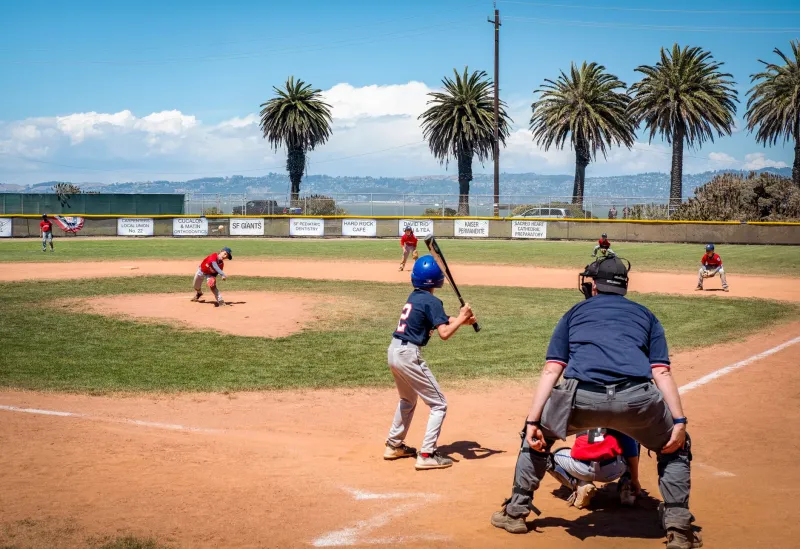
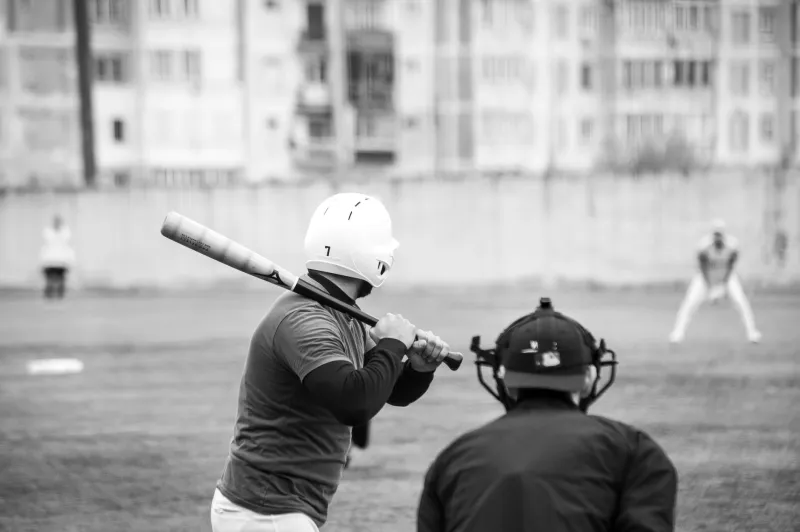
There is a conversation that happens in dugouts across America every single spring. A young hitter is locked in, mechanically sound, generating real bat speed — and then the coach pulls him aside before an at-bat and says something like: just make contact, or we need a groundball here, or shorten up and put it in play. The intention is tactical. The consequence, over hundreds of repetitions across a developmental career, can be quietly devastating.
The assumption embedded in that instruction is that situational hitting requires a different, lesser version of your swing. That to bunt, to go the other way, to move a runner — you must first dismantle the mechanics that make you dangerous. Japanese training philosophy challenges that assumption at its foundation. And the evidence it offers is worth every American coach's serious attention.
The American Compromise Model
Conventional American batting instruction has historically treated power mechanics and contact mechanics as two separate toolkits. Power swings feature full hip rotation, aggressive hand path, and maximum extension through the zone. Contact swings, by contrast, are taught with a shortened stride, quieted hips, a more passive upper body, and a priority on simply meeting the ball rather than driving it.
On the surface, this seems logical. Situational baseball demands precision. You cannot afford a miss when the game calls for a bunt or a productive groundball to the right side. So coaches teach hitters to dial back — to reduce variables by reducing movement.
The problem is what happens to those hitters over time. When a young player spends formative repetitions training a mechanically compromised swing, that swing begins to compete with the power swing for neurological real estate. The body does not cleanly separate "situational me" from "power me." It blends them. And the blend, more often than not, weakens both.
Research in motor learning consistently shows that the brain consolidates movement patterns based on frequency and emotional context. A hitter who practices shortened, passive mechanics in high-stakes situations — late innings, runners on, close games — is teaching his nervous system that pressure moments call for compromise. That is a deeply counterproductive lesson.
What Japanese Academies Teach Instead
At elite Japanese baseball academies, the instructional framework starts from a different premise: the mechanics that generate power are the same mechanics that generate control. The goal is not to choose between them. The goal is to master the underlying structure so completely that it can be expressed at varying intensities without ever being abandoned.
Consider the Japanese approach to the bunt — one of the most mechanically divergent plays in the American instructional model. American hitters are typically taught to square around early, deaden the bat, and essentially catch the pitch on the barrel. Japanese hitters are taught to maintain their athletic stance, preserve hip alignment, and redirect the bat's angle without collapsing the kinetic chain that supports their regular swing.
The distinction sounds subtle. The developmental difference is enormous. The Japanese hitter who bunts correctly is still practicing balance, still reinforcing hip-to-shoulder sequencing, still working within a mechanically coherent framework. He is not building a separate, weaker pattern. He is expressing the same pattern with adjusted intent.
The same philosophy applies to contact-priority at-bats. Rather than teaching hitters to shorten up and go passive, Japanese coaches train athletes to control the depth of their hip rotation and the timing of their extension — to modulate power output while keeping the foundational sequence intact. The hips still load. The hands still lag. The barrel still enters the zone on the correct path. What changes is how far the hitter commits through the ball, not whether the mechanics fire at all.
The Development Cost of the False Choice
For American players between the ages of roughly twelve and eighteen, the years when swing mechanics are most plastic and most easily shaped, the situational compromise model extracts a real cost. These are the repetitions that build the neural templates a hitter will rely on for the rest of his career. Spending a significant portion of those repetitions in a mechanically broken-down state is not neutral. It actively competes with the development of elite mechanics.
There is also a confidence dimension worth examining. Hitters who are consistently told to abandon their mechanics in important moments begin to associate high-pressure situations with mechanical uncertainty. They enter those at-bats already in a posture of reduction. Japanese training, by contrast, reinforces the idea that your best mechanics are always available — that the situation changes the intention, not the foundation. That psychological framing alone produces measurably different results in competitive environments.
Coaches at the youth and high school level may push back here, arguing that situational execution is a real skill that requires specific practice. That is true. No one is suggesting that hitters should never work on bunts or contact plays. The argument is about how that work is structured — whether it teaches athletes to abandon their mechanics or to express them with precision.
Reframing the Coaching Conversation
The practical shift this requires is less dramatic than it might appear. It begins with coaches examining their own language. Phrases like shorten up, just make contact, and don't try to do too much all carry an implicit message: your real swing is too much for this moment. Replacing those phrases with cues that preserve mechanical integrity — stay connected, control your rotation, same path, different depth — keeps the hitter in a productive frame without sacrificing tactical awareness.
Drills matter as well. Japanese training systems use graduated intensity work, where hitters execute the full mechanical sequence at controlled power levels rather than switching between two entirely different movement patterns. A hitter working on right-side groundballs, for example, might practice driving the ball to that location with a full hip load and controlled extension, rather than simply slapping at pitches with a passive, arms-only approach.
The goal is mechanical continuity across all situations. The hitter who can bunt, go the other way, hit-and-run, and pull the ball with authority — all from the same foundational framework — is a genuinely versatile offensive weapon. The hitter who has been trained to toggle between two compromised versions of a swing is, at best, inconsistent, and at worst, mechanically confused in the moments that matter most.
The Argument Coaches Need to Hear
American baseball has produced extraordinary hitters, and the sport's instructional tradition deserves respect. But the situational compromise model is one area where Japanese training philosophy offers a genuinely superior framework — not because Japanese baseball is inherently better, but because it has more rigorously examined the relationship between mechanical integrity and situational execution.
Young American hitters deserve instruction that treats their development as a unified project. Power and versatility are not opponents. Taught correctly, they reinforce each other. The sacrifice swing myth has cost enough players enough developmental years. It is time to replace the false choice with a more demanding, more honest standard: master the mechanics deeply enough that the situation never requires you to abandon them.