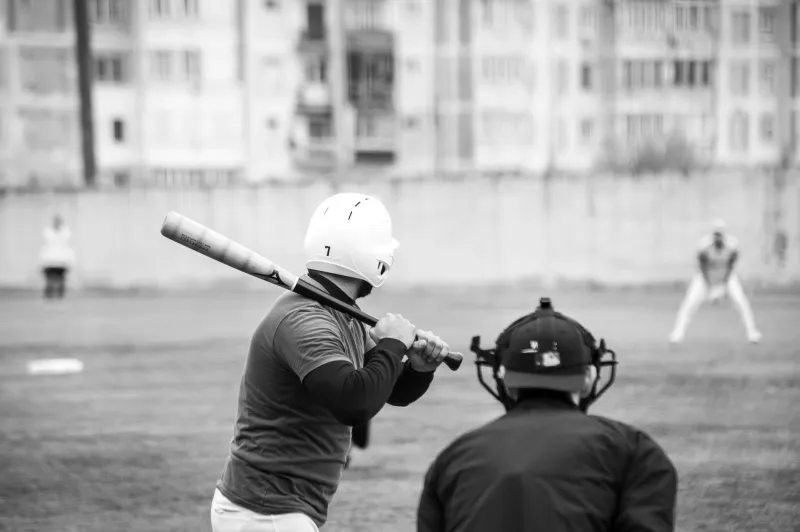
Hold Less, Hit Harder: The Science of Grip Tension and What Japanese Training Reveals About Your Missing Bat Speed

There is a deeply ingrained instinct in competitive hitters: when the moment matters most, grip harder. Two strikes on the board, a fastball expected at the letters, a playoff game on the line — the natural human response is to squeeze. To hold on. To assert control through force.
It is also, according to biomechanical research and Japanese batting methodology, one of the most reliable ways to strip 10 or more miles per hour from your swing.
This is the grip pressure paradox, and it is quietly undermining the development of hitters at every level of American baseball.
Why Tighter Feels Safer but Performs Worse
The intuition behind a firm grip is not irrational. In most athletic contexts, tension and force production go hand in hand. But the baseball swing is a rotational, whip-like movement — and whips do not generate speed through rigidity. They generate speed through sequential energy transfer, from the body's core outward through the hands and finally into the barrel.
When a hitter clamps down on the handle, that chain of energy transfer is interrupted. The forearm muscles responsible for grip activation are directly connected to the muscles that govern wrist and elbow mobility. Excessive grip tension creates a kind of neuromuscular traffic jam: the forearms stiffen, wrist hinge becomes restricted, and the natural lag that allows the barrel to whip through the zone is dramatically reduced.
Biomechanics researchers studying swing mechanics have documented this relationship extensively. In studies using force-sensitive grip instrumentation, hitters who maintained moderate grip pressure — roughly 50 to 65 percent of their maximum squeeze capacity — consistently produced higher bat speed at contact than those gripping at 80 percent or above. The difference in exit velocity between these groups often exceeded 8 to 12 miles per hour, a margin that separates routine fly balls from well-struck line drives.
What Japanese Academies Call "Yurui Chikara" — Relaxed Strength
In Japanese baseball development, there is a concept referred to in coaching circles as yurui chikara, which translates loosely as "relaxed strength" or "soft power." It describes the deliberate cultivation of tension that is dynamic rather than static — present enough to maintain control, loose enough to allow fluid, explosive movement.
Japanese batting coaches have long emphasized that the hands should feel almost passive during the early and middle phases of the swing. The grip tightens only at the precise moment of contact, a micro-second of purposeful force that stabilizes the barrel through the hitting zone. Outside of that moment, the hands are described as "alive" — responsive, mobile, and free.
This is a fundamentally different philosophy from what many American youth and high school coaches teach. In traditional American instruction, a firm grip is often presented as a foundation of good hitting mechanics. The intention is sound — a loose grip can cause the bat to twist or slip — but the execution frequently produces hitters who are chronically overtensed before they ever enter the batter's box.
The Stress Escalation Problem
One of the most significant challenges in addressing grip tension is that it tends to worsen under pressure, precisely when hitters need it most. Sports psychologists refer to this as "choking through over-control" — the phenomenon where heightened arousal drives athletes toward compensatory physical tightening.
For hitters, this manifests as a gradual escalation of grip pressure from the on-deck circle through the at-bat. By the time a hitter is in a two-strike count against a quality pitcher, grip pressure in untrained athletes can spike to near-maximum levels. The result is a swing that looks mechanically sound on the surface but is fundamentally restricted — slower through the zone, less adjustable, and less able to generate the last-second barrel acceleration that separates solid contact from weak contact.
Japanese training programs address this directly through what coaches describe as "pressure auditing" — teaching hitters to develop conscious awareness of their grip tension at each stage of the at-bat. Hitters practice deliberately releasing and resetting grip pressure between pitches, using breath control and tactile focus to return to a neutral, dynamic tension state.
Diagnosing Your Own Grip Tension: Three Field Tests
Before a hitter can correct a grip tension problem, they need to identify it. The following diagnostic approaches are used in structured training environments and can be adapted for individual practice.
The Forearm Visual Check: During soft toss or tee work, ask a partner to observe your forearms from the front as you swing. If the forearm veins and tendons are visibly pronounced before the swing begins — during the load phase — your grip is already too tight. Forearm vascularity at rest is normal; at load, it signals premature tension.
The Tap Test: Hold the bat in your normal grip and tap your index finger against the handle. If you cannot tap freely without disrupting your grip structure, your hands are locked. A properly tensioned grip allows for small, independent finger movements without collapsing.
The Delayed Tighten Drill: Take dry swings with a deliberate focus on keeping the grip at 40 percent pressure through the entire swing until the moment the barrel reaches the contact zone. Consciously fire the grip at that instant, then release. Most hitters will find this drill awkward at first — a sign that their grip has been chronically overtensed throughout the swing.
Building the Dynamic Grip: A Progressive Training Approach
Correcting grip tension is not a one-session fix. It requires deliberate reprogramming of deeply ingrained neuromuscular habits, and it is best approached progressively.
Stage One — Towel Swings: Grip a rolled towel instead of a bat and take full swings. The towel provides no rigid feedback, forcing the hands to stay soft and the wrists to remain mobile. This drill isolates the feeling of a relaxed grip without the compensatory stiffening that a bat handle often triggers.
Stage Two — Underload Bat Work: Use a bat that is significantly lighter than your game bat for tee and soft toss sessions. Lighter implements naturally discourage overtensing because there is less perceived need to control the barrel. The goal is to transfer the relaxed grip sensation developed with the underload bat into regular bat work over time.
Stage Three — Pressure Cue Integration: Assign a tactile cue — such as feeling the bat rest in the fingers rather than the palm — that you consciously check before each swing during batting practice. Over time, this check becomes automatic, and the dynamic grip becomes the default rather than the exception.
The Payoff Is Real — and Measurable
Hitters who commit to grip tension training report results that go beyond bat speed numbers. They describe a swing that feels easier, more fluid, and more adjustable to off-speed pitches. They find it easier to stay back on breaking balls because the hands are not locked into a premature acceleration pattern driven by tension.
The bat speed gains are measurable as well. Hitters working through structured grip tension programs in Japanese-influenced training environments regularly report radar gun improvements of 6 to 12 miles per hour over 8 to 12 weeks of focused work — without any change to their physical strength or mechanical fundamentals.
The grip is the final point of connection between the athlete and the barrel. How a hitter manages that connection — with intelligence rather than instinct — may be the single most underrated variable in American batting development today.
Squeeze less. Swing harder. The math is that straightforward.