Stored Energy, Explosive Release: The Science of Hand Lag and Why Elite Hitters Never Rush to the Barrel

The Instinct That Works Against You
When a pitcher releases the ball, every instinct in a hitter's body says the same thing: move. Get the bat going. Close the gap. The faster the hands engage the barrel, the more time the bat has to reach the zone — or so the thinking goes.
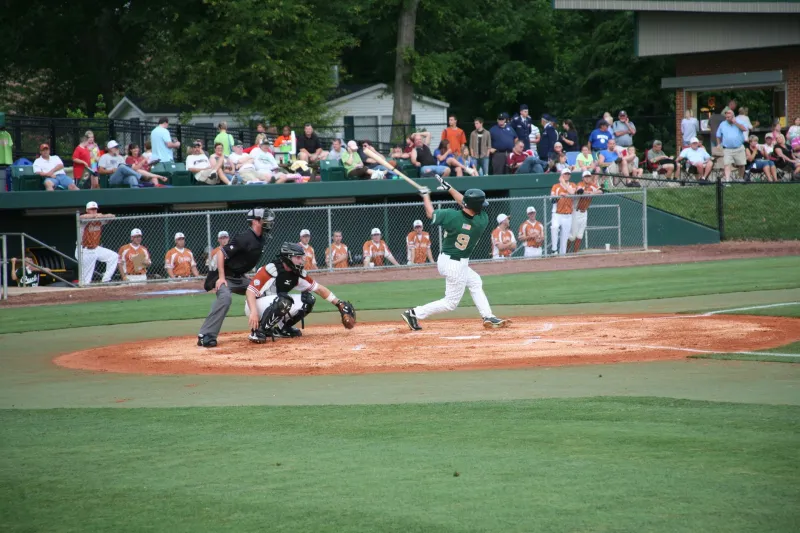
But watch high-speed footage of MLB hitters at the top of their game, and something unexpected emerges. The hands don't rush. In fact, the most powerful swings in professional baseball are characterized by a deliberate, almost unsettling delay between the initial movement of the lower body and the moment the hands finally drive the barrel toward the ball.
This phenomenon — commonly called hand lag — is one of the most misunderstood mechanics in hitting instruction. Coaches who don't understand the physics behind it often correct it out of their hitters entirely, unknowingly stripping away the very mechanism responsible for generating elite-level bat speed and impact force.
What Hand Lag Actually Is
Hand lag does not mean slow hands. That distinction matters enormously.
In a properly sequenced swing, the lower half initiates first. The stride foot lands, the hips begin rotating, and kinetic energy starts traveling up through the core. At this stage, the hands remain back — relatively passive, trailing behind the rotation rather than leading it. This is the lag phase.
The barrel, during this window, is essentially being "wound up" by the body's rotation while the hands resist the urge to fire early. The tension created between the rotating lower half and the stationary upper half is where the stored energy lives.
When the hands finally release — timed correctly to match the pitch location — that stored tension unloads in a fraction of a second. The barrel whips through the zone with significantly more velocity than it could achieve if the hands had simply engaged the moment the hips turned.
Japanese batting academies have long referred to this principle as tameru, loosely translated as "storing" or "reserving" — the idea that power is not created at the moment of contact, but accumulated through the deliberate withholding of movement earlier in the sequence.
The Physics of the Whip
The biomechanical model underlying hand lag is similar to cracking a whip. The handle moves first, and energy travels down the length of the whip toward the tip. The tip doesn't move immediately — it waits until the wave of force reaches it, at which point it accelerates to a speed far beyond what the handle ever achieved.
The human swing works along the same principle. The hips are the handle. The hands are the midpoint. The barrel tip is the end of the whip.
If the hands move simultaneously with the hips, the system loses its sequential chain. Energy isn't transferred — it dissipates. The result is a swing that feels powerful but delivers less actual force to the ball.
Research in sports biomechanics consistently supports this model. Studies examining angular velocity in elite hitters show that peak barrel speed occurs well after peak hip rotation — sometimes by as much as 80 to 100 milliseconds. That gap is not accidental. It is the lag window doing its job.
What Slow-Motion Footage Reveals
Comparing high-speed footage of a developing hitter against a professional reveals the lag difference almost immediately, even to an untrained eye.
In a developing hitter's swing, the hands and hips tend to move together. The bat path is often described as "stiff" or "arm-dominant." There is effort, but the barrel arrives at the contact zone without the whipping acceleration that defines elite mechanics.
In a professional's swing, there is a visible stretch — a moment where the upper body appears to almost fall behind the lower body's rotation. Then, suddenly, the hands fire. The barrel accelerates through contact with a snap that is difficult to fully appreciate at full speed but unmistakable in slow motion.
This is not a subtle difference. It is often the single most visible mechanical gap between high-level hitters and those who plateau in development.
Why Coaches Accidentally Eliminate It
Hand lag is frequently misidentified as a timing problem. When a young hitter is late to the ball, a coach's natural response is to tell them to start their hands sooner. In some cases, this is the right adjustment. But in many others, it accelerates the hands at the expense of the lag, creating a hitter who is on time but fundamentally weaker at contact.
The correct diagnosis requires looking at where in the sequence the timing breakdown is occurring. If the lower half is initiating too late, the fix is below the waist. If the hands are releasing too early — before the lower half has generated its rotational force — the fix is teaching the hitter to tolerate the tension of staying back longer.
These are very different problems with very different solutions.
Drills for Developing Lag Without Losing Timing
The Resistance Band Hip-Hands Drill Attach a light resistance band to the hitter's front hip and anchor it to a fixed point behind them. As the hitter takes their stride and rotates, the band creates physical resistance that forces the lower half to work harder to initiate. This exaggerates the separation between hip rotation and hand engagement, helping hitters feel the lag window in an amplified way. Over time, reduce the resistance as the pattern becomes internalized.
The Pause-and-Fire Tee Drill Set up a batting tee at middle-middle location. Have the hitter take their normal stride and load, then physically pause for one full second at the top of their load before swinging. This enforced pause trains the nervous system to tolerate the stored tension of the lag phase rather than releasing it prematurely. Begin with front toss before progressing to live pitching.
Slow-Motion Video Review Filming swings at 240 frames per second or higher and reviewing them frame by frame is one of the most effective teaching tools available. Have hitters identify the exact frame where their hips begin rotating and the exact frame where the barrel begins accelerating. The gap between those two frames is their lag window. Elite hitters typically show a gap of 5 to 8 frames at 240fps. Developing hitters often show 1 to 2 frames, or none at all.
Weighted Ball Separation Drill Have the hitter hold a light medicine ball (2 to 4 lbs) in their hitting stance. On the coach's command, the hitter rotates their hips fully while keeping the ball held back against their rear shoulder for as long as possible before throwing it toward a target. The medicine ball eliminates the bat variable and allows the hitter to focus entirely on the sensation of lower-half rotation leading upper-half release.
Patience as a Mechanical Skill
There is a reason the most powerful hitters in the game appear unhurried even against elite velocity. The lag they have developed allows them to gather more information about the pitch while simultaneously storing more energy for release. Their patience is not psychological — it is structural.
For hitters who want to unlock a new level of power without changing their timing or adding unnecessary movement, learning to genuinely delay the hands is among the highest-return mechanical investments available. The barrel will get there. But the energy it carries when it arrives depends entirely on what happened in the half-second before it left.
Master the lag, and you don't just swing faster. You swing smarter.