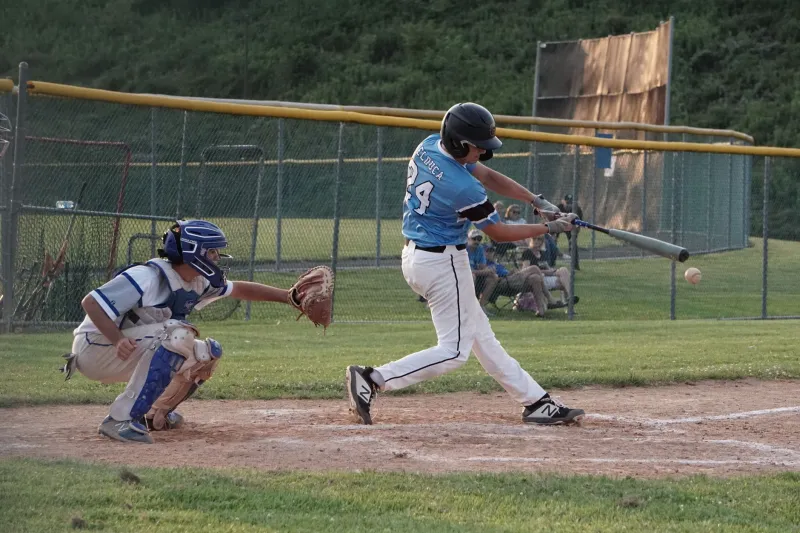
When the Slow Pitch Wins: The Cognitive Science Behind Why Hitters Thrive on Pitches They Should Miss
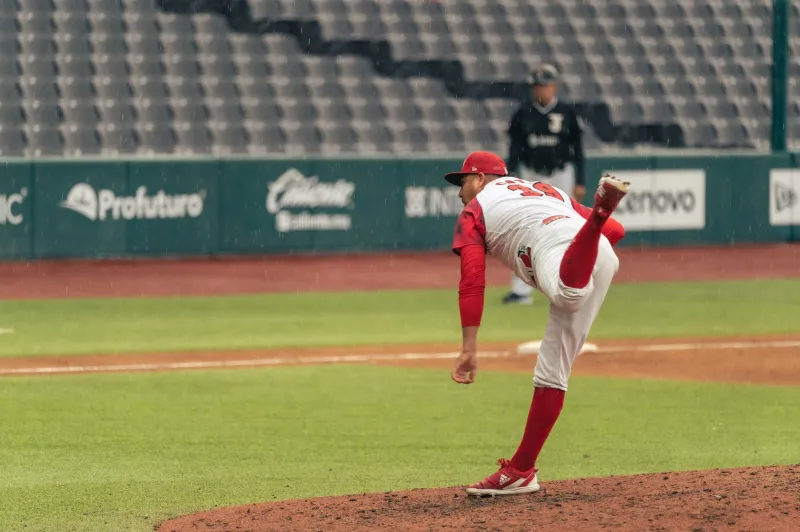
There is a moment familiar to every serious baseball observer — a hitter digs in against a crafty pitcher, gets fed a looping curveball well below the zone, and somehow drives it into the gap for a double. The broadcast team calls it "a great piece of hitting." The pitcher shakes his head in disbelief. The hitter trots to second base looking almost unsurprised.
What just happened, exactly? According to the emerging intersection of cognitive science and elite batting instruction, that moment was not luck. It was the product of a mental architecture that most amateur hitters never develop — and that many coaches never think to teach.
The Brain Is Always Guessing
At its core, hitting a baseball is a prediction problem. The human visual system cannot fully process a pitch from release point to contact in the time available. A 95 mph fastball reaches the plate in roughly 400 milliseconds. The brain requires approximately 200 milliseconds just to register what it has seen. That leaves an impossibly narrow window for conscious decision-making.
What fills the gap is anticipation. The brain constructs a predictive model based on pitcher tendencies, arm slot, release point, and recent pitch sequencing. It is not reacting to the pitch — it is betting on it.
This is where the timing illusion takes root. When a hitter's predictive model is calibrated to a fastball, the body begins its forward weight transfer early. The hands start their path. The hips begin to fire. The entire kinetic chain is already committed before the pitch fully reveals itself. Against a changeup or a slow curveball, that early commitment becomes a liability — unless, paradoxically, the hitter's mechanics are so deeply grooved that the body can self-correct within the window.
Why Overthinking Disrupts the Correction System
Here is the counterintuitive part. Hitters who consciously try to "stay back" on off-speed pitches often fare worse than those who simply trust their swing and allow the body's proprioceptive feedback to adjust. Research in motor learning consistently demonstrates that conscious interference with an automated motor program degrades its execution. In other words, thinking about your swing while you are swinging is one of the most reliable ways to ruin it.
Elite hitters describe this phenomenon in their own language. They talk about "seeing the ball" rather than "reading the pitch." They speak of the swing happening to them rather than being consciously directed. Japanese batting philosophy has long emphasized a concept translated loosely as mushin — a state of mental emptiness in which the body acts without the interference of deliberate thought. It is not mysticism. It is applied neuroscience.
When a hitter is in that state, an off-speed pitch does not trigger panic. The visual cortex registers the deceleration. The cerebellum — the brain's movement coordinator — makes micro-adjustments to the hip rotation speed and hand path. The swing arrives slightly later than it would against a fastball, but the barrel still finds the ball. The result looks effortless precisely because it was.
The Pitch Recognition Hierarchy
Not all pitches are processed equally. Cognitive researchers studying baseball hitters have identified what might be called a pitch recognition hierarchy — a ranked order in which the brain prioritizes certain pitch cues over others.
Spin rate and trajectory angle are processed first, because they carry the most predictive information. Velocity is processed slightly later, which is why a changeup with convincing fastball spin can fool even experienced hitters into early commitment. The brain sees "fastball spin" and fires the motor program before the slower velocity is fully registered.
Amateur hitters who rely on velocity recognition — essentially waiting to see how fast the pitch is before deciding to swing — are operating on the slowest channel in the hierarchy. Elite hitters who have trained their visual systems to read spin and release point first are working from a much faster, more reliable information stream. This is why a seasoned professional can look completely comfortable against a 78 mph curveball while a college-level hitter flails through the same offering.
The practical implication is significant: training pitch recognition is not about watching more pitches. It is about learning to read the right cues in the right order, then trusting the motor system to respond without conscious override.
What On-Field Examples Reveal
Consider the pattern that scouts and analysts have long noticed in certain elite hitters — a tendency to post higher slugging percentages against off-speed pitches than against fastballs in specific counts. This is not a coincidence of sample size. It reflects a hitter whose mechanics are so well-calibrated and whose mental approach is so process-oriented that the slower pitch actually allows more time for the body's correction system to operate.
In high-fastball environments — think two-strike counts where pitchers attack up in the zone — these same hitters sometimes struggle more. The pitch arrives before the correction window fully opens, and any slight misread of timing produces weak contact or a swing-and-miss. The "easier" pitch, by conventional logic, becomes the harder one in practice.
This pattern has been observed repeatedly in players who came up through Japanese developmental systems, where timing drills are built around off-speed recognition from early adolescence. The emphasis on deliberate, unhurried swing mechanics — combined with extensive soft-toss and variable-speed machine work — produces hitters whose bodies have internalized a wider correction window than their American counterparts trained primarily on velocity.
Training the Trust Response
For coaches working with developing hitters at the high school and collegiate levels, the actionable takeaway is clear: stop drilling the fastball exclusively. Variable-speed batting practice, mixed-pitch soft toss, and deliberate off-speed recognition work are not supplementary activities. They are foundational.
More importantly, the mental component demands equal attention. Hitters who are taught to evaluate their swings during the swing — to consciously monitor their hip turn, their hand path, their weight transfer in real time — are training themselves into the exact cognitive interference pattern that degrades performance. The correction system works best when it operates below the threshold of conscious awareness.
Drills that reward process over outcome, that praise a mechanically sound swing on a ball in the dirt as readily as a well-struck line drive, build the neural architecture that makes the timing illusion work in a hitter's favor rather than against them.
Trusting the Swing You Cannot See
The timing illusion is ultimately a story about trust. The brain that has been trained to anticipate, to read spin, and to allow the body's correction system to function without interference will produce swings that look inexplicably good against inexplicably bad pitches. The brain that overthinks, overmonitors, and second-guesses its own programming will look lost against the very pitches it should handle.
Mastering the art of the swing, as any serious student of the game eventually discovers, is less about controlling the body and more about learning when to let it go.