Inside the Ball: How Japanese Contact Drills Are Teaching American Hitters to Command the Barrel Like Elite Gap Hitters
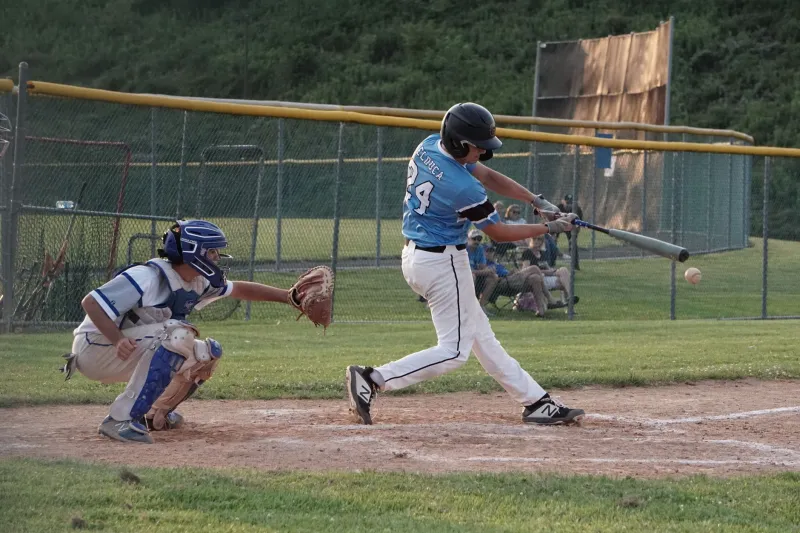
Watch a hitter like Freddie Freeman drive an outside pitch into the left-center gap, and you are witnessing something that looks effortless but demands extraordinary precision. The barrel arrives late. The hands stay tight to the body. The contact point is deep enough to generate pull-side power while maintaining enough plate coverage to handle anything painted on the outer third. What you are watching, whether Freeman knows it or not, reflects a mechanical philosophy that Japanese baseball academies have been systematically teaching for decades.
In American development circles, the emphasis has historically gravitated toward bat speed, launch angle, and exit velocity — metrics that are real and meaningful, but incomplete. Japanese coaching culture, by contrast, has long treated hand path and barrel delay as the foundational pillars of offensive production. The result is a generation of hitters trained to do something deceptively difficult: stay inside the ball through contact.
What Does It Actually Mean to Stay Inside the Ball?
The phrase gets thrown around freely in dugouts and batting cages across the country, but its mechanical definition is often misunderstood. Staying inside the ball means that the knob of the bat leads the barrel toward the contact zone, keeping the hands closer to the body than the barrel head throughout the swing's loading and early drive phase. The barrel does not cast outward prematurely. It does not take a wide, looping arc around the outside of the pitch.
When a hitter stays inside correctly, the barrel enters the hitting zone later in the swing sequence — a concept Japanese coaches refer to in terms of ma, or controlled interval. That delayed barrel entry creates two critical advantages. First, it allows the hitter more time to read the pitch, because the commitment to full extension happens later. Second, when the barrel does arrive, it does so with the face angled to drive the ball with authority to all fields rather than pulling off the pitch and generating weak contact.
Premature barrel extension — sometimes called "casting" — is the primary mechanical flaw that prevents hitters from reaching their contact potential. It is also one of the most common errors in American youth and amateur baseball, in part because the instinct to reach for the ball feels natural and even powerful in the moment.
The Japanese Approach: Progressive Constraint Drills
Japanese academies address casting through what can best be described as progressive constraint training. Rather than simply instructing a hitter to keep the hands inside, coaches build a series of drills that make it physically impossible to cast the barrel while still making productive contact. The constraint is the teacher.
The Fence Drill Variation
Most American coaches are familiar with a basic version of the fence drill, in which a hitter takes swings close to a chain-link fence or net to prevent the bat from wrapping around the body during the load. The Japanese variation extends this concept to the front side. A vertical barrier — a pole, a net panel, or even a coach holding a pad — is positioned approximately 18 inches in front of the hitter's lead hip. The hitter must drive through contact without the hands contacting the barrier. This forces the knob to lead the barrel directly toward the zone rather than allowing the hands to drift outward. Hitters who cast will immediately feel the resistance. Hitters with a clean inside path will swing freely.
The Short-Bat Contact Series
Using a bat cut to roughly 24 inches — a training tool common in Japanese academies and increasingly available through specialty equipment retailers in the U.S. — hitters work through a contact series at reduced distances from a tee or soft-toss feeder. The shortened barrel makes it nearly impossible to generate meaningful contact on outside pitches if the hitter casts, because the barrel simply will not reach the ball in time. Coaches cue hitters to feel the sensation of the knob pointing toward the pitcher's mound before the barrel turns through the zone. This is the kinesthetic feedback that translates directly to full-swing mechanics.
The Inside-Pitch Overload Protocol
One of the more counterintuitive drills in the Japanese contact curriculum involves deliberate overexposure to inside pitches at moderate velocity. The goal is not to teach pull-side hitting. The goal is to ingrain the muscle memory of tight, compact hand movement under pitch pressure. When a hitter successfully handles a pitch on the inner half by staying inside rather than spinning off it, the mechanical pattern becomes reinforced. Coaches then shift to middle-away locations and ask the hitter to replicate the same hand path — a transfer effect that produces the gap-to-gap contact American coaches are always seeking.
Why American Power Development Sometimes Works Against Contact Quality
This is not an argument against developing bat speed or maximizing exit velocity. Those qualities matter, and dismissing them entirely would be a disservice to the modern game. The concern is one of sequencing and priority.
When young American hitters are trained primarily through high-intent, max-effort swings — the dominant model in many travel ball and showcase environments — they often develop a swing pattern optimized for pulling mistakes. A belt-high fastball middle-in can be driven with a casting swing. A changeup in the dirt cannot. A curveball painted at the knees away cannot. And when the bat path is built around that pulling pattern, adjusting to quality secondary pitches becomes a structural problem, not simply a timing problem.
Japanese development philosophy inverts this sequence. Precision and path are established first, at controlled velocities and with deliberate mechanical constraints. Power and intent are layered in afterward, once the hand path is reliable. The result is a hitter whose bat speed is channeled through a lane that actually connects with diverse pitch types rather than hunting for one quadrant of the strike zone.
Translating the Drills to Your Practice Routine
For American players looking to integrate these concepts without overhauling their entire approach, a practical starting point is a dedicated 15-minute hand-path block at the beginning of each batting practice session — before high-intent work begins. Use the short-bat contact series for the first 10 minutes, focusing entirely on the sensation of the knob leading. Finish with 20 to 30 front-toss reps at a middle-away location, cueing the same hand path you felt with the short bat.
The fence drill variation can be added twice per week as a standalone constraint exercise. Consistency over weeks matters more than volume in any single session. The neuromuscular pattern you are trying to build requires repetition at manageable intensities before it transfers to live-pitch situations.
The Gap Hitter's Advantage
In an era when defensive shifts and advanced scouting have made predictable pull-side tendencies easier to neutralize, the hitter who can consistently drive the ball to all fields — particularly into the gaps — holds a genuine competitive advantage. That is not a romanticized notion. It is reflected in the offensive profiles of the most durable contact hitters in professional baseball.
Japanese training methodology does not promise to turn every player into an all-fields masher overnight. What it offers is a systematic framework for building the hand precision that makes gap hitting repeatable rather than accidental. The drills are accessible. The principles are straightforward. The transfer effect, for hitters willing to invest the practice time, is real.