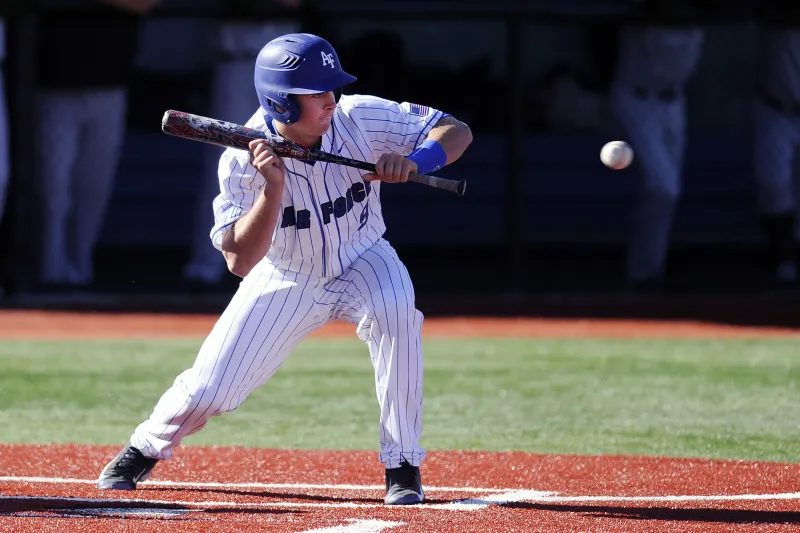
Why Chasing Bat Speed Is Holding Young Hitters Back — And What to Prioritize Instead

Photo by Photo by Josh Hemsley on Unsplash on Unsplash
Walk into almost any youth or high school baseball facility in the United States today and you will likely encounter a radar gun pointed at a hitter's bat. Bat speed sensors, launch angle monitors, and exit velocity trackers have become standard fixtures of modern American batting instruction. The underlying assumption is intuitive: faster bat, harder contact, better results. The data, however, tells a more complicated story — and coaches who have studied Japanese training methodologies are increasingly vocal about it.
The argument here is not that bat speed is irrelevant. At the highest levels of the game, it absolutely matters. The argument is that for the vast majority of developing hitters — those in youth leagues, high school programs, and even early college careers — the relentless pursuit of raw bat speed metrics before foundational mechanics are established may be actively working against long-term development.
The Metric Obsession and Its Unintended Consequences
The proliferation of affordable swing-tracking technology has created a generation of young hitters who know their bat speed to the tenth of a mile per hour but cannot consistently square up a changeup. This is not a hypothetical concern — it is a pattern that experienced coaches across the country are describing with increasing frequency.
When bat speed becomes the primary training metric, it tends to drive certain compensations. Young hitters begin over-rotating their hips prematurely, casting their hands away from their body to generate centrifugal force, and lunging forward to create the sensation of a fast, powerful swing. Each of these patterns can temporarily inflate bat speed readings while simultaneously undermining the contact-making precision that actually produces offensive value in a real game.
Coach Daniel Park, who has trained hitters at the youth and collegiate levels after spending time studying Japanese high school and university programs, describes the phenomenon bluntly. "I see kids who can swing the bat at 75 miles per hour and miss a fastball down the middle by six inches," he says. "Their bat speed is impressive on a sensor. Their batting average tells the real story."
What Japanese Programs Prioritize Instead
Japanese baseball instruction, particularly at the developmental level, operates from a fundamentally different philosophical starting point. Rather than measuring output — how fast or how hard — the initial emphasis is on proprioceptive awareness: a hitter's ability to understand where their body is in space, what their hands are doing through the hitting zone, and how their weight is transferring from load to contact.
This approach is rooted in the broader Japanese athletic philosophy of kata — the disciplined, repetitive mastery of foundational form before speed or power are introduced. In baseball terms, this translates to extensive work at reduced intensity: slow-motion swings, mirror work, deliberate tee drills with feedback focused on path and contact point rather than ball flight or velocity.
Japanese youth coaches frequently have hitters swing with undersized or weighted implements not to build strength but to force awareness. When the margin for error shrinks, a hitter must develop genuine feel for the barrel. That feel — the proprioceptive map of a correct swing — becomes the foundation upon which speed and power are later built.
The Proprioception Argument
Proprioception is the body's internal sense of its own position and movement. For a hitter, it is what allows a skilled player to make micro-adjustments mid-swing, compensate for off-speed pitches, and maintain barrel accuracy across different pitch locations. It is not something that can be measured by a bat sensor, but it is arguably the single most important physical attribute for consistent contact.
The challenge is that proprioceptive development is slow, unglamorous work. It does not produce the satisfying crack of a well-struck ball or the impressive numbers that light up on a radar display. It produces competence — the deep, durable kind that holds up when a pitcher throws something unexpected in a tied game in the seventh inning.
American training culture, shaped by a sports media environment that celebrates home runs and exit velocity leaderboards, is structurally biased against this kind of patient development. Parents want to see their child hit the ball hard. Coaches feel pressure to demonstrate visible results. The metric-driven approach satisfies these social pressures even when it fails the hitter's long-term interests.
When Power Without Precision Meets Real Competition
The performance gap becomes visible when American power-focused hitters encounter elite international competition — a pattern that scouts and international coaches have noted for years. Japanese hitters who have trained primarily on precision and mechanics often demonstrate superior pitch recognition, better two-strike approaches, and more consistent contact rates against breaking balls. Their raw bat speed numbers may be comparable or even lower, but their actual offensive production in high-level competition frequently surpasses that of American counterparts with more impressive sensor readings.
This is not a coincidence. A hitter who has spent years developing genuine feel for the barrel can make adjustments. A hitter who has spent those same years chasing bat speed metrics has, in many cases, reinforced compensatory patterns that become increasingly difficult to unlearn as the level of pitching improves.
A Practical Reordering of Priorities
None of this means coaches should ignore bat speed entirely or that developing physical strength and rotational power is unimportant. The point is sequencing. For hitters who have not yet established consistent, mechanically sound contact — which describes most players under the age of eighteen — the training hierarchy should look something like this:
First: Barrel awareness and contact consistency. Can the hitter consistently make solid contact on pitches in different locations? This is the non-negotiable foundation. Tee work, front toss, and slow-speed live pitching with feedback focused on contact quality should dominate early development.
Second: Swing path and mechanics. Is the bat traveling on a path that gives the hitter the maximum opportunity to make contact? Hip sequencing, hand path, and extension through the zone are the mechanical priorities. These should be developed before power is introduced.
Third: Speed and power development. Once a hitter has genuine proprioceptive awareness and a mechanically sound path, adding rotational strength, hip speed, and bat speed becomes highly productive. At this stage, the sensor numbers mean something because they are built on a foundation that can actually use them.
The Long Game
Development is not linear, and there is no single correct timeline. But the coaches producing the most consistent long-term results at the collegiate and professional levels are, increasingly, those who resist the pressure to optimize for metrics that look impressive at fourteen and instead build hitters who can actually hit at twenty-two.
At BattingUya, the conviction is that mastering the swing means understanding the swing — deeply, physically, and intellectually. That understanding begins not with speed but with precision. The power comes later, and when it does, it is built on something real.