The Numbers Don't Tell the Whole Story: Why Bat Control Beats Exit Velocity for Most Developing Hitters
Photo: U.S. Navy photo by Mass Communication Specialist 1st Class Jennifer A. Villalovos, Public domain, via Wikimedia Commons
Walk into nearly any high school or college batting facility in the United States today, and you will find a Rapsodo unit humming in the corner and a whiteboard covered in exit velocity benchmarks. The message to young hitters is clear and consistent: swing harder, hit the ball further, and the numbers will take care of the rest.
It is a seductive framework. It is also, according to a growing chorus of coaches and player development professionals, dangerously incomplete.
This is not an argument against athletic development or power training. It is an argument about sequencing — about what skills should be built first, which metrics actually predict long-term hitting success, and what American baseball culture might be missing by looking almost exclusively at what a radar gun can measure.
The Metric Obsession and Its Unintended Consequences
The Statcast era has delivered genuine analytical value to professional baseball. Exit velocity, launch angle, and barrel rate have given front offices a more precise language for evaluating hitters, and elite players at the major league level absolutely benefit from understanding and optimizing these numbers.
The problem arises when the same metrics are applied indiscriminately to players at the high school, collegiate, and lower minor league levels — developmental stages where the foundational mechanics of hitting are still being formed.
"We have seventeen-year-olds who can quote their average exit velocity but cannot consistently make contact on a two-strike slider away," said one minor league hitting coordinator who requested anonymity due to organizational policy. "The data is measuring the ceiling of what they can do on a perfect swing. It tells us almost nothing about their floor — about how they perform under pressure, against advanced pitching, in a 1-2 count."
This gap between peak-swing metrics and real-game performance is precisely what critics of the exit velocity framework point to most often. A player who generates 95 mph exit velocity on a middle-middle fastball but strikes out looking at a changeup in the dirt is not a complete hitter. The number flatters without informing.
What Elite Asian Baseball Academies Prioritize Instead
The contrast with Japanese and Korean player development philosophy is striking. Programs affiliated with NPB academies and the Korean Baseball Organization (KBO) development system have long operated under a different set of foundational priorities, and the results are visible in the profiles of players who have transitioned successfully to MLB competition.
Rather than organizing early development around power output, these programs emphasize three interconnected competencies: bat control, timing recognition, and situational hitting intelligence.
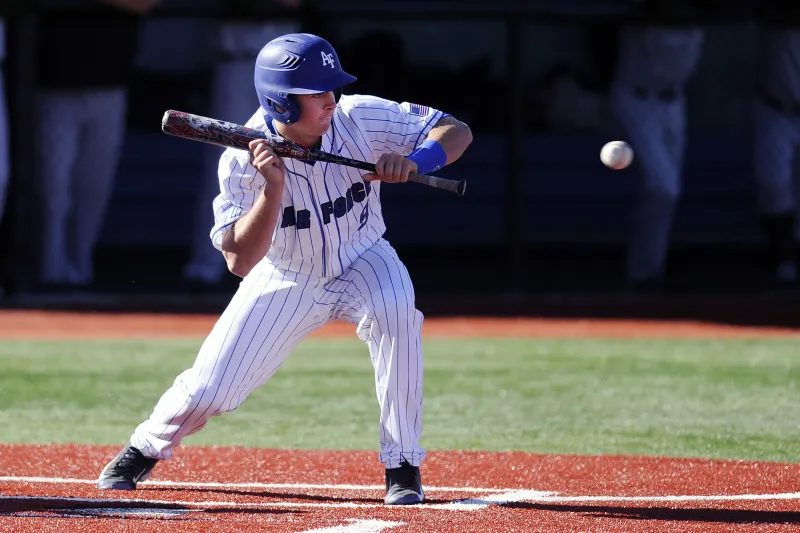
Bat control refers to the hitter's ability to direct the barrel to a specific location in the strike zone with consistency and precision — not just on favorable pitches, but across pitch types, speeds, and locations. It is trained through high-repetition contact drills, location-specific tee work, and the proprioceptive conditioning methods that have become a hallmark of Japanese academy training.
Timing recognition is the ability to read a pitch's velocity, spin, and trajectory early enough to make a sound decision — swing or take, and if swing, where to direct the barrel. Korean academies in particular place enormous emphasis on pitch recognition drills that begin without a bat at all, requiring hitters to simply identify pitch type and location before any mechanical training occurs.
Situational hitting intelligence encompasses understanding the count, the game state, the pitcher's tendencies, and one's own role in the lineup. It is, by nature, the hardest of the three to quantify — which may be precisely why American development frameworks have been slowest to address it systematically.
A Conversation With the Coaches Who Are Noticing the Gap
Several strength and conditioning coaches working within affiliated minor league systems have begun pushing back against the exit velocity monoculture, though most do so carefully given the institutional pressures of modern professional baseball.
One independent strength coach who works with multiple players in the Double-A and Triple-A ranks described a recurring pattern he observes: "I get guys who have been told their whole development that they need to get to 95, 96 exit velo. They've added twenty pounds of muscle, they've completely rebuilt their swing around generating more force — and then they get to Double-A, where pitchers actually locate the ball and change speeds, and they have no idea what to do. Their bat is moving fast, but it's not moving smart."
A hitting instructor with experience in both the NPB and affiliated minor league systems offered a complementary perspective: "The Japanese hitters I've worked with don't think about exit velocity. They think about the barrel being in the right place at the right time. When that's the focus, the exit velocity takes care of itself — because you're making better contact, more often, on more pitch types."
These observations align with research in motor learning and skill acquisition. Studies in sports science consistently show that outcome-focused metrics — how hard did the ball travel — are less effective drivers of skill development than process-focused cues — was the barrel in the correct position at contact. Chasing the number before mastering the movement is, in technical terms, putting the cart before the horse.
Matching Training Priorities to Player Type and Position
It would be an oversimplification to suggest that exit velocity is irrelevant for all players. A corner outfielder or first baseman in a power-oriented lineup legitimately needs to develop elite raw strength, and for those players, force production training is an appropriate developmental priority.
The argument for bat control primacy is strongest, and most practically applicable, for the majority of players who do not fit the prototypical power profile — middle infielders, center fielders, catchers, and contact-oriented corner players who are more likely to contribute through on-base percentage, situational production, and plate discipline than through home run totals.
For these players, the developmental calculus changes considerably. An additional five mph of exit velocity gained at the cost of contact rate and pitch recognition is almost certainly a net negative. Conversely, improving barrel control and two-strike approach has measurable, immediate impact on the metrics that actually predict offensive contribution: on-base percentage, strikeout rate, and walk rate.
A Practical Reordering of Priorities
For coaches and players looking to rebalance their development framework, the shift does not require abandoning data or dismissing the value of power training. It requires a more honest conversation about sequencing and about which skills serve as the foundation for everything else.
Before a young hitter chases exit velocity benchmarks, the following competencies deserve priority:
- Consistent barrel-to-ball contact across all pitch locations, not just favorable ones
- Pitch recognition and timing, developed through dedicated vision training and pitch identification drills
- Two-strike approach mechanics, including the ability to shorten the swing and make productive contact under pressure
- Situational awareness, including understanding when to drive the ball versus when to put it in play
Exit velocity matters. Launch angle matters. But they matter most when built on top of a foundation that Japanese and Korean academies have been deliberately constructing for decades. The scouts tracking the radar gun readings are watching the product of that foundation — and American player development would benefit from paying closer attention to the process that produces it.