From Tokyo to the Batter's Box: How Japanese Hitting Philosophy Is Reshaping the Modern MLB Swing
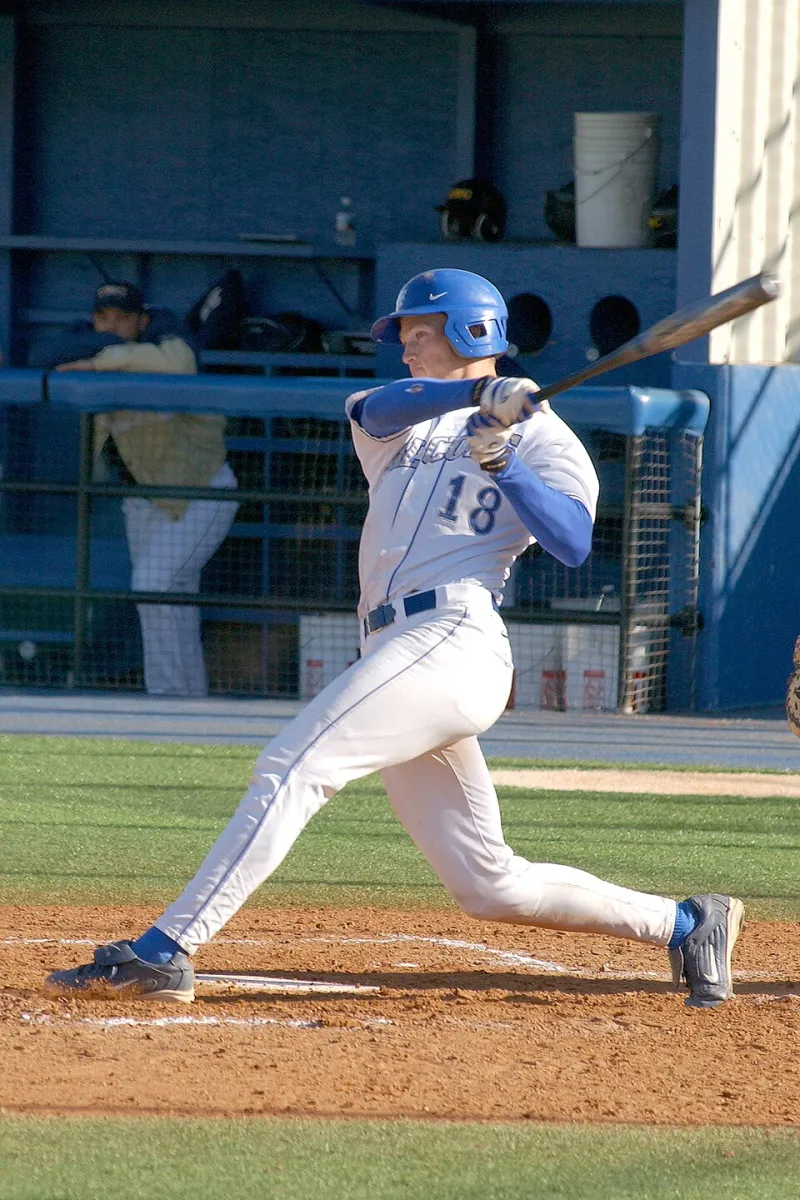
Photo: Unknown, Public domain, via Wikimedia Commons
A Philosophy Built on Precision, Not Power
Walk into any NPB (Nippon Professional Baseball) training facility, and you will immediately notice something different. Batters are not simply swinging harder—they are swinging smarter. The Japanese approach to batting has long prioritized biomechanical efficiency over raw muscular output, a distinction that sounds subtle but produces dramatically different results at the plate.
In recent years, a growing number of MLB organizations have begun importing this philosophy wholesale, bringing Japanese hitting consultants into their development pipelines and asking their coaches to study a system that has quietly produced some of the most technically refined hitters in professional baseball history. The question driving front offices from San Diego to New York is no longer whether Japanese coaching works—it is how quickly American players can absorb it.
The Core Difference: Hip Rotation Timing
Perhaps the most discussed divergence between Western and Japanese batting mechanics concerns the sequencing of hip rotation. Traditional American coaching has long emphasized an aggressive, early hip turn—"open up and drive" is a phrase familiar to any Little League alumnus. Japanese methodology, by contrast, advocates for a delayed hip rotation that keeps the hips closed slightly longer, allowing the hands and barrel to generate whip-like acceleration through the contact zone.
This technique, sometimes referred to as tame in Japanese coaching circles—meaning roughly "stored tension"—functions much like a coiled spring. By maintaining torso resistance against the lower-body rotation, the batter creates a differential between the hips and shoulders that releases as an explosive, late burst through the hitting zone. The practical effect is a swing that generates elite exit velocity without the hitter appearing to swing particularly hard.
Several MLB players who have worked with Japanese hitting coaches have described the experience as counterintuitive at first. "You feel like you're holding back, and then suddenly the bat just flies through," one American League infielder noted during a spring training interview. "It took about three weeks before my body actually trusted the process."
Bat Lag: The Hidden Engine of Contact Quality
Closely related to hip rotation timing is the concept of bat lag—the degree to which the barrel trails behind the hands during the early portion of the swing. Japanese coaching traditions place extraordinary emphasis on preserving bat lag deep into the swing sequence, treating it as the primary source of power rather than a byproduct of it.
Western coaching has historically encouraged batters to "get the barrel out early," a cue designed to improve coverage of the outer half of the plate. While this approach has merit in certain pitch scenarios, Japanese coaches argue that premature barrel release sacrifices the kinetic chain that makes elite contact possible. By maintaining a tight angle between the forearm and the bat handle through the loading phase, hitters preserve angular momentum that translates directly into bat speed at the moment of contact.
Biomechanics researchers working with several MLB clubs have confirmed this through high-speed camera analysis. Players who adopted Japanese-influenced lag mechanics showed measurable improvements in bat speed at the point of contact—not at the initiation of the swing, but precisely where it matters most.
Follow-Through as Feedback, Not Finish
Another area where Japanese coaching philosophy diverges meaningfully from American convention is the treatment of follow-through. In many American batting systems, follow-through is treated primarily as aesthetic—something that happens after the ball is hit and therefore carries limited instructional weight. Japanese coaches view it differently.
In the NPB framework, the follow-through is treated as diagnostic feedback for everything that occurred before contact. A high, extended finish indicates proper hip clearing and shoulder rotation. A truncated or collapsing finish suggests that the batter decelerated through the zone—often a sign of tension or mechanical inefficiency earlier in the swing. By training players to monitor and evaluate their own follow-through, Japanese coaches effectively teach batters to self-correct in real time, reducing dependence on external coaching cues during competition.
This emphasis on proprioceptive awareness—understanding the body's position and movement through internal sensation rather than external observation—is deeply embedded in Japanese athletic culture and has proven particularly effective with professional hitters who have already exhausted conventional mechanical adjustments.
MLB Teams Taking Notice
The organizational embrace of Japanese hitting philosophy has accelerated noticeably over the past three seasons. Multiple playoff-caliber clubs have added Japanese hitting consultants to their player development staffs, while others have formalized partnerships with NPB organizations specifically to access coaching expertise rather than player talent.
The results have been most visible among hitters who entered these programs with strong raw tools but inconsistent contact rates. Reducing strikeouts while maintaining power output is one of the most stubborn challenges in player development, and several clubs have credited Japanese-influenced mechanical adjustments with helping hitters achieve exactly that balance.
It is worth noting that this influence runs in both directions. Japanese players who have come to MLB—Shohei Ohtani being the most prominent contemporary example—have demonstrated that the mechanics refined in NPB translate not merely adequately but spectacularly to American competition. Their success has made it considerably easier for hitting coaches to advocate for Japanese methodologies within organizations that might otherwise have been skeptical.
What American Hitters Can Take Away
For players at every level—from high school prospects to weekend recreational leagues—the principles underlying Japanese batting philosophy offer practical guidance that extends well beyond professional baseball. The emphasis on body sequencing over brute force, on stored tension over early aggression, and on self-awareness over rote repetition represents a genuinely different way of thinking about what it means to swing a bat well.
At BattingUya, we believe that understanding the why behind a technique is as important as mastering the how. Japanese coaching philosophy provides a coherent, research-supported framework for answering questions that conventional instruction often leaves unaddressed. As more MLB organizations integrate these methods into their development systems, the influence of Japanese batting science on American baseball will only deepen—and the hitters who engage with it seriously will find themselves with a meaningful edge at the plate.