Stop to Go Faster: The Biomechanical Case for Strategic Deceleration in the Batting Swing
There is a phrase that circulates through American batting cages with remarkable persistence: stay through the ball. It conjures images of relentless acceleration, a swing that never eases, a barrel that powers forward without interruption from load to follow-through. The image is compelling. It is also, in critical ways, incomplete — and that incompleteness may be quietly capping the bat speed of hitters at every level.
Japanese hitting coaches have long operated from a different premise. Within many of Japan's elite academies and professional organizations, the swing is not viewed as a single continuous thrust of energy. It is understood as a sequence of phases, and crucially, some of those phases involve deliberate deceleration. Not hesitation. Not mechanical breakdown. Purposeful, controlled braking — the biomechanical equivalent of drawing back a bowstring before release.
The Elastic Energy Principle
To understand why deceleration can increase velocity, it helps to revisit a concept from basic physics: the stretch-shortening cycle. Muscles and connective tissues store elastic potential energy when they are rapidly lengthened under load, then release that energy explosively when they contract. Think of a rubber band. The more controlled tension you apply in the stretching phase, the more kinetic energy is available when you let go.
In the batting swing, this mechanism is most active during the loading and transition phases — the moments between the initial movement of the stride and the first rotation of the hips. When a hitter loads with intention and then briefly decelerates before initiating the swing proper, the musculature of the core, hips, and posterior chain is placed under precisely the kind of elastic tension that produces explosive rotational power.
The problem is that most American training environments do not distinguish between these phases. Hitters are coached to think of the swing as a single, unified motion, which encourages them to maintain muscular activation throughout. That constant tension prevents the elastic loading mechanism from functioning at full capacity. You cannot stretch a rubber band that is already taut.
What Japanese Coaches Are Actually Teaching
Within the Japanese coaching framework, the concept of ame — a term loosely translated as controlled pause or softness — appears frequently in discussions of loading mechanics. It does not mean stopping the swing. It refers to a brief moment of reduced muscular tension during the transition from load to launch that allows the body's elastic systems to engage fully.
Coaches at organizations throughout Japan's professional and amateur ranks train hitters to recognize this moment and, more importantly, to stop fighting against it. Many American hitters, when they encounter this natural deceleration point during their swing development, interpret it as a flaw and try to override it with added effort. That instinct, while understandable, disrupts the very mechanism that generates elite-level bat speed.
The distinction matters most in game situations. Under the pressure of a live at-bat, hitters instinctively try to do more — grip tighter, rotate faster, push harder through every phase. Japanese coaching methodology specifically addresses this tendency by training the deceleration phase until it becomes automatic, so that competitive pressure cannot override the stored-energy mechanism that produces real velocity.
The Exit Velocity Paradox
Data from professional hitters — both in MLB and in Japan's Nippon Professional Baseball league — supports the counterintuitive nature of this relationship. Hitters who demonstrate measurable deceleration in the late loading phase consistently produce higher exit velocities than those whose swing velocity remains constant throughout. The reason is straightforward: the elastic rebound from a properly loaded transition phase adds rotational force that active muscular contraction alone cannot replicate.
Think of it this way. A hitter who maintains constant tension and constant acceleration from load through contact is essentially generating power from one source. A hitter who loads with controlled deceleration and then releases into rotation is generating power from two: active muscular contraction and elastic rebound. The second hitter will almost always produce more velocity at the point of contact, even if their raw strength metrics are comparable.
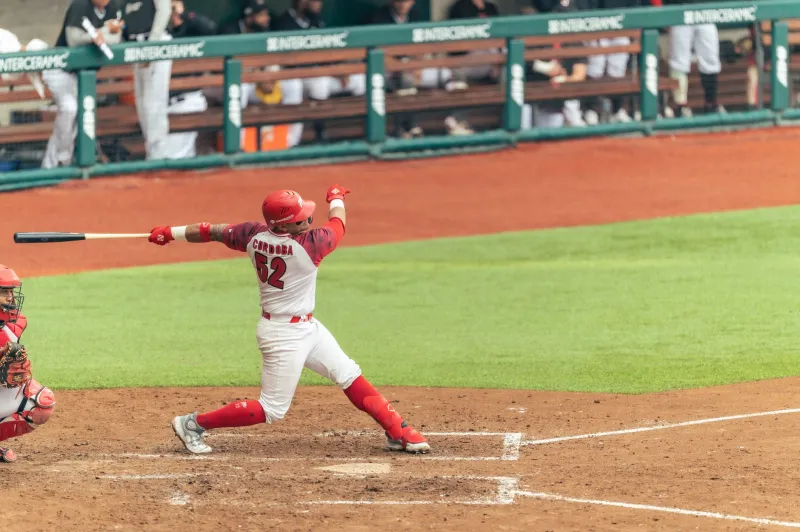
This is not a theoretical argument. High-speed video analysis of elite hitters — from Shohei Ohtani to Freddie Freeman to any number of NPB standouts — reveals a consistent pattern: a brief reduction in swing velocity during the transition phase, followed by an explosive acceleration into the hitting zone that far exceeds what the active contraction phase alone would produce.
Practical Drills for Building the Deceleration Phase
Translating this principle into training requires specificity. Vague instructions to "load better" or "stay back" do not communicate the biomechanical mechanism. The following drill progressions, adapted from Japanese academy methodology, are designed to build genuine feel for the elastic loading phase.
Resistance Band Load Drill: Attach a light resistance band to the hitter's back hip. As they load, the band applies gentle tension in the direction of the pitch, creating the sensation of elastic stretch. The hitter should feel a brief moment of increased tension at the top of the load before initiating hip rotation. Performing this drill slowly at first — focusing on the feeling rather than the speed — trains the neuromuscular system to recognize and utilize the elastic phase.
Pause-and-Fire Tee Work: Set up a standard batting tee and instruct the hitter to load fully, hold the loaded position for a full two-count, and then initiate the swing. This exaggerated pause trains the hitter to separate the loading phase from the launch phase cognitively, reducing the instinct to rush through the transition. Once the separation is established, gradually reduce the pause until the swing flows naturally — but the phase distinction remains intact.
Soft-Toss with Deceleration Cue: During soft-toss sessions, add a verbal cue — "soft" or "settle" — at the moment the hitter should transition from load to launch. The goal is not to interrupt the swing but to train the hitter's awareness of the moment when elastic energy is at its peak. Over time, this awareness becomes automatic, and the hitter stops fighting the natural deceleration point.
Why American Training Culture Resists This Concept
It is worth acknowledging why the deceleration principle has been slow to gain traction in the United States. American athletic culture, particularly at the youth and high school levels, places enormous emphasis on visible effort. A hitter who appears to slow down — even briefly, even productively — can be misread as losing focus or lacking aggression. Coaches intervene. The natural elastic phase gets coached out of hitters before they ever learn to use it.
Japanese coaching culture, shaped by decades of attention to the internal mechanics of movement rather than its external appearance, is more comfortable with the idea that less visible effort can produce more measurable result. The patience to let a biomechanical process complete itself, even under competitive pressure, is treated as a skill — one that requires training, not just instruction.
Building Velocity the Right Way
For American hitters and coaches willing to examine this principle seriously, the payoff is significant. Training the deceleration phase does not require abandoning existing mechanics. It requires learning to recognize a moment that already exists in every swing and stop suppressing it.
The hitters who consistently produce elite exit velocities in real game situations — not just in batting practice, not just on a radar gun during a showcase — are the hitters who have learned to work with their body's elastic systems rather than against them. That is not a Japanese insight or an American insight. It is a biomechanical reality. The coaches who have embraced it most fully have simply had the patience to let the science lead.
At BattingUya, we believe mastering the swing means understanding it completely — including the parts that happen when you slow down.