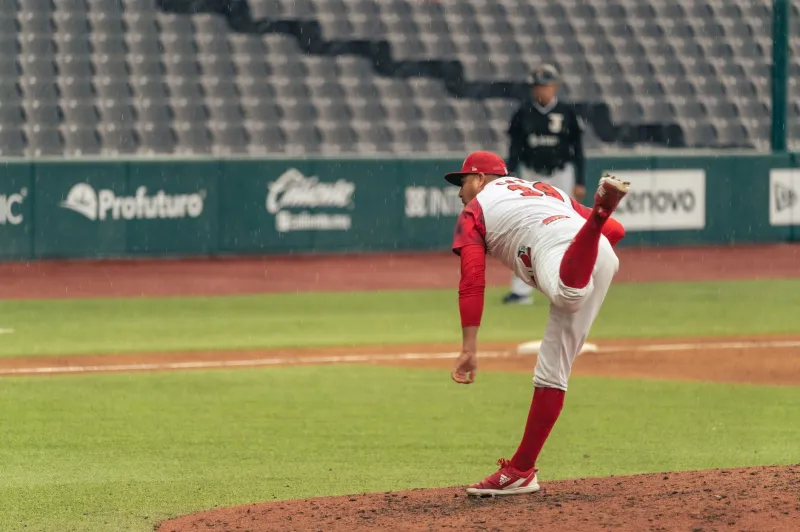
The Seventh-Inning Swing: Controlled Fatigue as a Diagnostic, Not a Punishment

Photo: Fcb981, CC BY-SA 3.0, via Wikimedia Commons
A clean cage swing on fresh legs is a poor audition for the seventh inning. By then, the legs have carried bases, the forearms have tightened, and the mind has absorbed six innings of decisions. The swing that appears under that load is the swing a hitter actually owns. Japanese training methods often use controlled fatigue to expose that swing, not to punish the athlete, but to diagnose which compensations appear when the body is tired.
Why Fatigue Reveals the Real Swing
Under mild fatigue, athletes tend to revert to their most grooved pattern. If posture, balance, or barrel control depends on fresh legs, it will fail when the legs are heavy. If the swing is organized around the trunk and hands, it may hold. Japanese coaches often prefer repeated swings with short rest and a clear mechanical standard because the standard becomes visible under stress.
This is not an invitation to grind. Controlled means supervised, measured, and stopped before mechanics collapse. The purpose is diagnosis, not exhaustion. A hitter who cannot maintain posture after ten swings does not need twenty more. The hitter needs to know which checkpoint failed.
The Diagnostic Set
Set A: Tempo swings. Take three rounds of ten dry swings at about eighty percent intent with forty-five seconds of rest. Check head stability, posture, and balance. If the head drifts or the back side collapses in round three but not round one, fatigue is exposing a mechanical dependency.
Set B: The fatigue ladder. Hit eight tee swings, perform a short shuttle or twenty-second jog, then hit eight more. Repeat for two or three rounds. Record barrel accuracy and direction. The goal is not to hit harder. The goal is to keep the same path when breathing is heavier.
Set C: Late-game front toss. After a baserunning segment, take front toss at game speed. Ask the hitter to adjust between inside and outside locations. Watch whether the swing shortens, the barrel drops, or the hitter begins to cheat early. These are the patterns that appear in the seventh inning.
Reading the Breakdown
Common compensations include early extension, pulling off the ball, a dropping barrel, loss of posture, and increased grip tension. Create a three-point checklist: head, posture, and barrel path. Video from the side and front can help, but the coach's eye is often enough if the checkpoints are clear.
Distinguish fatigue from pain. Soreness, sharp discomfort, or a change in mechanics that persists after rest should end the drill. Controlled fatigue is a training tool, not a medical test.
Building a Swing That Holds
Use progressive overload. Add fatigue in small doses and keep the mechanical standard constant. Establish a quality gate: stop the set when two consecutive swings violate the checkpoints. Train a reset routine between pitches so the hitter can recover breathing and posture. Conditioning work, including aerobic base work and unilateral leg strength, can also help the swing hold late in games.
A Four-Week Progression
Week one: three sets of eight swings with sixty seconds of rest. Week two: three sets of ten swings with forty-five seconds of rest. Week three: four sets of eight swings after a short shuttle. Week four: simulate an inning with five swings, a jog, five more swings, and a short rest. Keep intent at eighty to ninety percent. Stop if form breaks. Monitor next-day soreness.
The Coaching Lesson
A fresh maximum exit velocity is a data point. A repeatable swing in the seventh inning is a skill. Use fatigue as a microscope, not a hammer. The goal is to find the compensations, train them out, and build a swing that still looks like the hitter when the game asks for more.